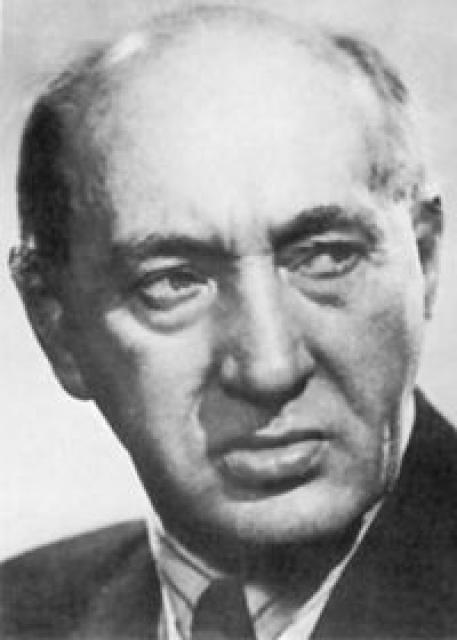
Lajos Nagy
 Hungary
- Dániel Dénes Kosztolányi
- Literary Beginnings and Nyugat Connection
- Wartime and Journalism
- Political Involvement and Literary Success
- Awards and Legacy
Dániel Dénes Kosztolányi
Early Life and EducationDániel Dénes Kosztolányi was born on March 29, 1885, in Szabadka (now Subotica, Serbia). His mother, Júlia Nagy, was an unmarried maid, and he was raised primarily by his grandparents. In 1901, he graduated from high school and worked as a mathematics and physics teacher, supplemented by legal work and tutoring for children from wealthy families. He studied law in college but never received a diploma.
Literary Beginnings and Nyugat Connection
Kosztolányi's first works appeared in the Social Democratic Party newspaper Népszava. In 1907, he published his debut novel. Meanwhile, he also wrote short stories that explored the complexities of everyday life. In 1908, he began collaborating with the modernist journal Nyugat, which would shape his literary career.
Wartime and Journalism
In 1915, Kosztolányi was conscripted for military service during World War I. However, due to poor mental health, he was discharged in 1917. From 1918, he edited the satirical magazine Bolond Istók. Throughout the 1920s and 1930s, he contributed to Nyugat and other periodicals, publishing numerous short stories and feuilletons.
Political Involvement and Literary Success
In the 1920s, Kosztolányi aligned himself with the banned Hungarian Communist Party. In 1935, he married. Despite the challenges of supporting himself solely through writing, he opened a bookstore in 1940. After World War II, he joined the Hungarian Communist Party in 1945, becoming a prominent socialist writer in the 1950s.
Awards and Legacy
Kosztolányi received the Baumgarten Prize in 1932, 1935, and 1938. In 1948, he was awarded the Kossuth Prize. His literary legacy includes a vast body of short stories, novels, poetry, and essays that reflect the complexities of Hungarian society and the human condition.


