Lakshmi Sehgal
 India
IndiaBiographical Information about Lakshmi Sahgal
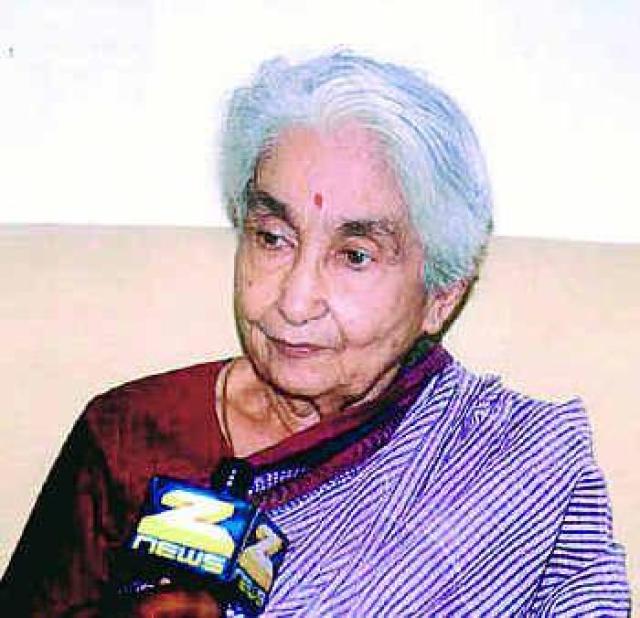
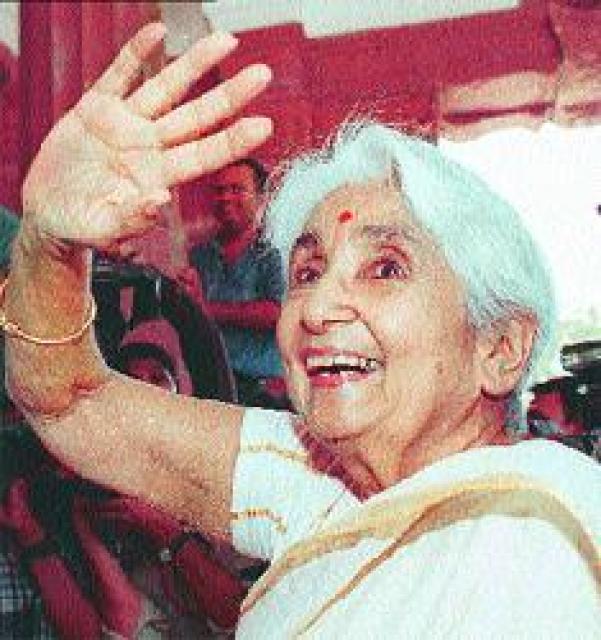
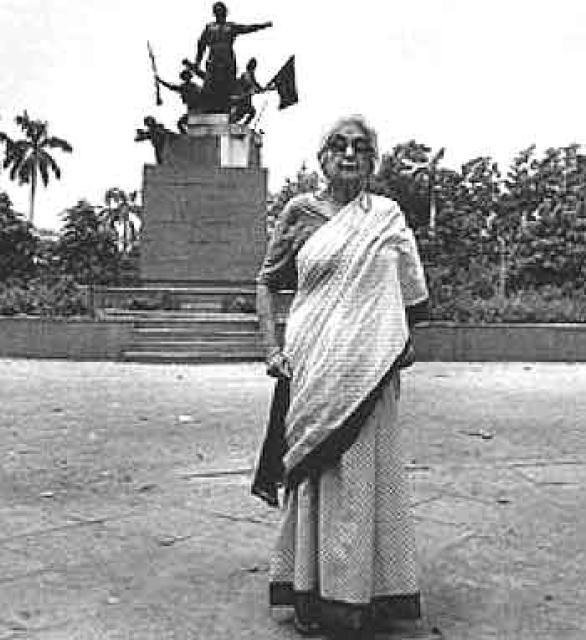
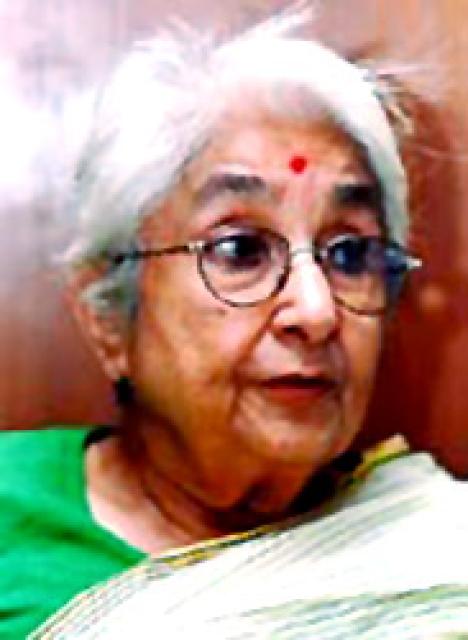
Lakshmi Sahgal was an Indian activist for independence and a left-wing politician. She was also a doctor by profession. During World War II, she fought in Burma on the side of Japan as a captain in the "Indian National Army" of S.C. Bose. She held the position of Minister for Women's Affairs in the pro-Japanese "government" of India. After the war, she became an activist for the Indian Communist Party (Marxist) and a member of the upper house of the Indian parliament. Her daughter, Subhashini Ali, is a well-known Indian politician and activist in the trade union movement. According to her daughter, Lakshmi Sahgal was an atheist.
Early Life and Education
Lakshmi Sahgal was born as Lakshmi Swaminathan. Her father, S. Swaminathan, was a renowned criminal law specialist of Tamil origin who worked in the Madras High Court. Her mother, A.V. Ammukutti, was a social worker and a well-known human rights activist from the prominent Vaddakathu family. Influenced by her mother's beliefs, she began studying medicine to help the poor. She obtained a Master's degree in Medicine from Madras Medical College in 1938, and a diploma in Obstetrics and Gynecology a year later.
Activism and Career
In 1940, Sahgal traveled to Singapore, where she established a clinic for the poor, particularly migrant workers from India. She soon became one of the most famous and wealthy gynecologists in the city. At the same time, she played an active role in the Indian Independence League. In 1942, when British forces surrendered Singapore to the Japanese, she devoted her efforts to helping prisoners of war and the wounded. Among the captives, she advocated for Indian independence (later, some of the prisoners joined the pro-Japanese "Indian National Army").
On July 2, 1943, Subhas Chandra Bose, a well-known fighter for Indian independence, former associate of Gandhi and Nehru, and an ally of the Nazis, arrived in Singapore. A few days later, Bose announced the formation of a "women's regiment" to fight "for Indian independence" on the side of the Japanese. Sahgal joined this unit, which had no equivalent in Asia. She was also appointed Minister for Women's Affairs in the collaborationist "Azad Hind" government. She was captured by the British in Burma and brought to India on March 4, 1946, where she was received as a heroine. Fearing mass unrest, the British were forced to release her from captivity.

Shortly after her release, in March 1947, Sahgal married former colonel of the "Indian National Army," Prem Kumar Sahgal, in Lahore. After their marriage, they settled in Kanpur, where she continued her career as a doctor. In this role, she had to address the problems of refugees, as a large number of them emerged after the partition of India into India and Pakistan.
In 1971, Sahgal joined the CPI (Marxist). During the war for the independence of Bangladesh, she organized refugee camps and medical assistance centers in Kolkata. In 2002, she was nominated as a candidate from the Left Party bloc in the Indian presidential elections (her only opponent was Abdul Kalam, who became the President of India). Throughout her life, Sahgal remained an active advocate for social justice and women's rights.