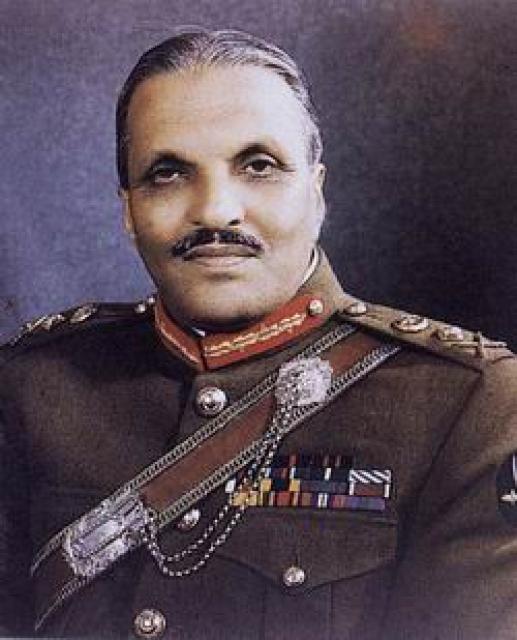
Muhammad Zia-ul-Haq
 Pakistan
- Muhammad Zia-ul-Haq: A Military and Political Figure
- Pakistan Army and Rise to Power
- Political Ambitions
- Appointment as Chief of Army Staff
- Overthrow of Bhutto
- Islamization and Martial Law
- Legacy
Muhammad Zia-ul-Haq: A Military and Political Figure
Early Life and Military CareerMuhammad Zia-ul-Haq was born on August 12, 1924, in Jalandhar, present-day India, to a retired military officer. He attended the Indian Royal Academy and was commissioned as an officer. During World War II, he served in the British Expeditionary Force in Burma, Malaysia, and Indonesia.
Pakistan Army and Rise to Power
After the independence of Pakistan in 1947, Zia-ul-Haq joined the Pakistani Army. He graduated from the Command and Staff College in Quetta in 1955 and underwent training at the Command and General Staff College in Fort Leavenworth, Kansas in 1959 and 1963.
Political Ambitions
Zia-ul-Haq's military career was punctuated by political maneuvering. He rose through the ranks during numerous military coups in Pakistan, biding his time to assume the highest post.
Appointment as Chief of Army Staff
In March 1976, Zia-ul-Haq was appointed Chief of Army Staff, bypassing several senior generals. Prime Minister Zulfikar Ali Bhutto's support for his appointment proved to be a fatal mistake.
Overthrow of Bhutto
Zia-ul-Haq exploited the political turmoil in Pakistan to his advantage. He conspired against Bhutto and seized power in a military coup on July 5, 1977. Bhutto was overthrown and later executed in 1979.
Islamization and Martial Law
Zia-ul-Haq established martial law and pursued a policy of Islamization. He aligned himself with Sunni Islamists and introduced laws that enforced traditional Islamic punishments for crimes. In 1984, he held a referendum to legitimize his Islamization policies and extend his presidential term by five years.
Legacy
Zia-ul-Haq's legacy is controversial. Some view him as a stabilizing force who restored order to Pakistan after a period of political instability. Others criticize his authoritarian rule and the rise of religious extremism during his presidency. Zia-ul-Haq was killed in a plane crash in 1988, leaving behind a lasting impact on Pakistani society and politics.