Lana Gogoberidze
 Georgia
- Early Life and Education
- Academic and Literary Pursuits
- Documentary Filmmaking
- Feature Film Debut
- Awards and Recognition
- Later Career and Political Stance
Early Life and Education
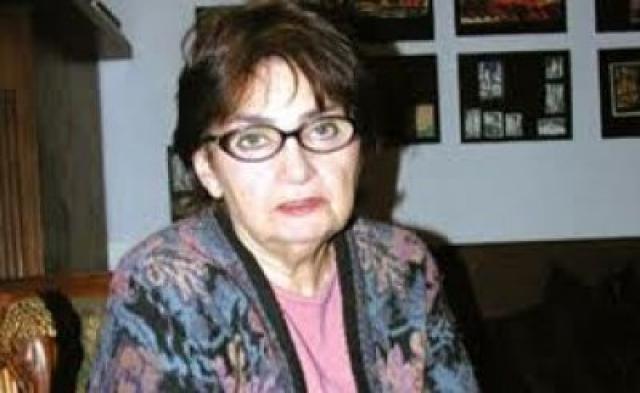
The Georgian filmmaker was born in Tbilisi, Georgia. She pursued her undergraduate studies in Philology at Tbilisi State University, graduating in 1950. Subsequently, she earned a degree in Film Directing from the prestigious All-Russian State Institute of Cinematography (VGIK) in Moscow in 1953, under the guidance of legendary filmmakers Sergei Gerasimov and Tamara Makarova.
Academic and Literary Pursuits
Besides her filmmaking career, she also served as a professor of film directing at the Shota Rustaveli Tbilisi State Theater Institute. She authored a monograph on the American poet Walt Whitman and translated his poems as well as works by the Indian poet Rabindranath Tagore.
Documentary Filmmaking
Her early cinematic endeavors focused on chronicle-documentary films, capturing historical events and cultural milestones. Notable works from this period include "Geologists," "1500 Years of Tbilisi" (1958), and "Native Georgia."
Feature Film Debut
In 1957, she joined the "Gruzia-Film" studio, marking her transition to feature filmmaking. Her first cinematic masterpiece, released in 1961, was titled "Under the Same Sky." Her subsequent films gained critical acclaim and commercial success, establishing her as one of the leading filmmakers in Georgia.
Awards and Recognition
Her contribution to cinema was widely recognized. She received the prestigious USSR State Prize in 1980 for her outstanding work. Her film "Several Interviews on Personal Matters" won the Grand Prix at the San Remo Film Festival and the Jury Prize at the All-Union Festival in Ashgabat. In 1986, she was awarded the Order of Friendship of Peoples.
Later Career and Political Stance
Despite her accomplishments, she declined the "Order of Radiance" from the President of Georgia in 2010. This decision reflected her disagreement with certain political events in her country.