Larry Nassar
 USA
- Education and Medical Career
- Abuse and Institutional Failures
- Guilty Pleas and Sentencing
- Legacy and Continuing Impact
Larry Nassar was a sports physician whose positions at Michigan State University and USA Gymnastics gave him access to generations of young athletes. He used that authority to sexually abuse patients under the guise of medical treatment. After years of complaints and institutional failures, he pleaded guilty to federal child pornography offenses and multiple Michigan sexual-assault charges. His case became one of the largest abuse scandals in American sports and exposed serious failures by organizations responsible for protecting athletes.
Education and Medical Career
Nassar was born on August 16, 1963, in Farmington Hills, Michigan. While attending North Farmington High School, he began working as a student athletic trainer for the girls’ gymnastics team. He studied kinesiology at the University of Michigan and earned an undergraduate degree in 1985. He then attended Michigan State University’s College of Osteopathic Medicine, receiving his medical degree in 1993.
After completing medical training in family and sports medicine, Nassar returned to Michigan State. He became an assistant professor and team physician, treating student athletes and working with the university’s gymnastics program. His professional standing expanded in 1996, when he became the national medical coordinator for USA Gymnastics and a physician for the U.S. women’s national team. He worked with elite gymnasts at major competitions and Olympic Games, gaining the trust of athletes, families, and coaches.
Abuse and Institutional Failures
Nassar sexually assaulted girls and women during medical appointments, presenting the abuse as treatment. He continued to see patients through his roles at Michigan State, USA Gymnastics, a private gymnastics club, and other settings. Survivors later described how his reputation and position made it difficult to recognize or report what was happening, while several said they or others had raised concerns years before public investigations began.
In 2014, Michigan State investigated a student’s complaint but did not bring criminal charges. In 2015, USA Gymnastics reported allegations to the FBI after conducting its own review. A later Justice Department inspector general investigation found that FBI officials in Indianapolis failed to properly document and pursue the allegations or promptly coordinate with local authorities. The FBI did not act with the urgency the reports required. Nassar continued treating athletes while the allegations remained unaddressed; a separate complaint to Michigan State University police in 2016 led to a search of his home and the discovery of child sexual abuse material.
The case became public in 2016 and grew as more survivors came forward. Hundreds of athletes and former athletes described abuse. Michigan State and USA Gymnastics faced scrutiny for how they handled warnings, complaints, and the oversight of Nassar’s work. At his sentencing hearings, more than 150 women and girls gave impact statements about the harm they had suffered. Olympians and other survivors helped bring the case to national attention and pressed institutions to acknowledge their responsibility.
Guilty Pleas and Sentencing
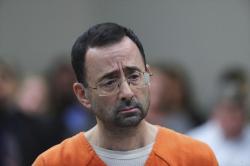
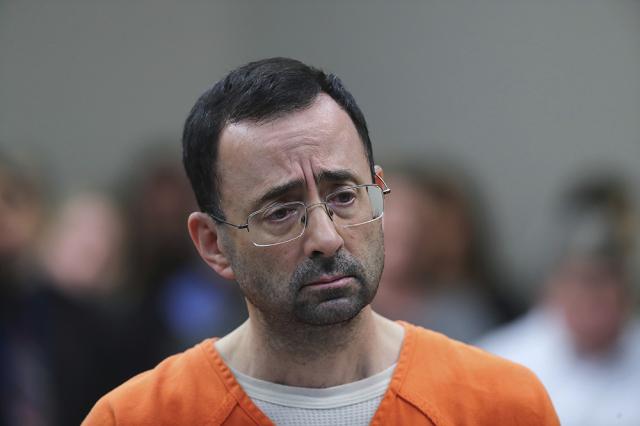
Nassar pleaded guilty in federal court in 2017 to receiving and possessing child pornography and to destroying or concealing evidence. In December of that year, he received a 60-year federal prison sentence.
In January 2018, he was sentenced in Michigan to 40 to 175 years for sexual assault. The following month, a second Michigan court imposed an additional 40 to 125 years after he pleaded guilty to three more sexual-assault counts. The sentences, together with the federal term, ensure that he will spend the rest of his life in prison.
Legacy and Continuing Impact
The Nassar case changed how abuse and athlete safety were discussed in American sports. Survivors’ public testimony forced governing bodies, universities, law-enforcement agencies, and the U.S. Olympic movement to confront how professional authority and institutional reputation had been allowed to override warnings. The Justice Department’s findings on the FBI’s handling of the early reports added a further account of how delays left athletes at risk.
Nassar remains imprisoned for his crimes. His professional career is now remembered chiefly as a story of betrayal and institutional failure, while survivors’ testimony and advocacy have become central to the lasting public record of the scandal.