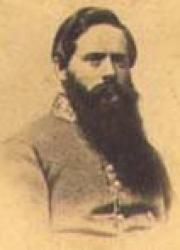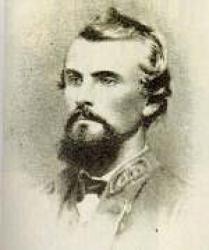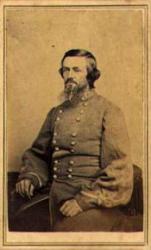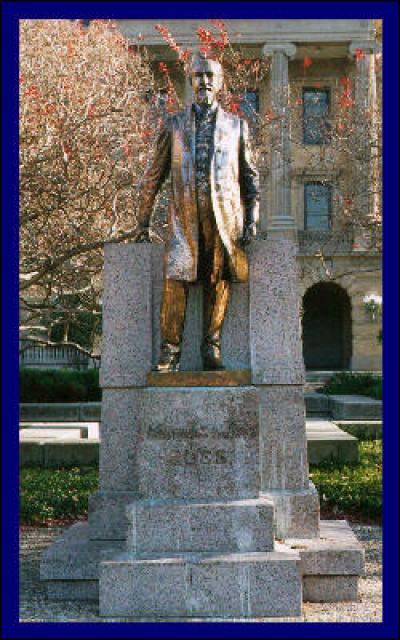
Lawrence Sullivan (Sul Ross)
 USA
USA- Biography of Lawrence Sullivan "Sal" Ross
- Early Life and Education
- Military Career and Civil War
- Political Career and Later Life
Biography of Lawrence Sullivan "Sal" Ross
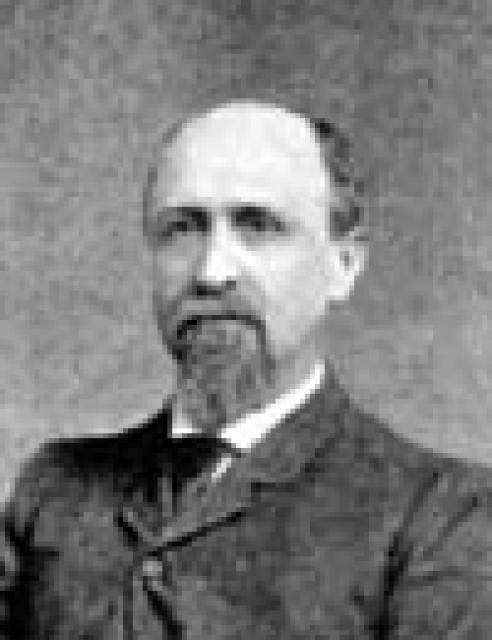
Lawrence Sullivan "Sal" Ross, a soldier, statesman, and university president, was born on September 27, 1838, in Bentonsport, Iowa Territory. His parents, Sharply Prince Ross and Catherine Ross (Falkerson), moved to Iowa from Mississippi in 1834. In 1839, the Ross family relocated to Texas, first settling in Milam County, then Austin, and finally Waco, where Sharply Ross became one of the most respected citizens and wealthy ranchers.
Early Life and Education
Growing up in Texas, Sal Ross developed a love for adventure and often accompanied his father and his comrades in conflicts with hostile Native American tribes. Despite his desire to join the military, his father insisted on him receiving a good education at the universities in Texas' Independence and Florence, Alabama (which he completed in 1859). Despite his civilian education, Sal Ross realized his childhood dream by voluntarily enlisting in the army and engaging in battles against the Comanche in September-October 1859, earning recognition from his superiors and sustaining a severe injury at the Battle of Wichita Village.
Military Career and Civil War
After recovering from his injuries, Ross completed his university education and returned to Texas. However, in the spring-summer of 1860, he reenlisted in the army and participated in an unsuccessful campaign against the Native Americans, first as a first lieutenant and then as a captain. Despite the expedition's failure, Ross caught the attention of Texas Governor Sam Houston, who allowed the young officer to recruit his own volunteer company to fight the Comanche in Young County. In December 1860, Ross, along with regular army units, pursued a large band of marauding Indians and defeated them at the Battle of Pease River, making him immensely popular throughout Texas.
With the outbreak of the Civil War, Ross left his ranger company and in May 1861, married Elizabeth Dorothy Tinsley, the daughter of a prosperous planter from Waco. He initially served as an official negotiator with Native American tribes but changed course and joined the regular army of the Confederacy, serving in the 6th Texas Cavalry Regiment as a captain and later a colonel. In these ranks, Ross participated in major operations in the Western Theater, including the battles of Pea Ridge, Corinth, and Vicksburg. In early 1864, he was promoted to brigadier general and given command of the Texas Cavalry Brigade, consisting of the 3rd, 9th, and 27th Texas Cavalry Regiments. The brigade fought valiantly in the campaigns at Atlanta and Franklin-Nashville. However, when it surrendered in May 1865 in Jackson, Mississippi, Ross was not with his troops as he was at home on leave. The Confederate defeat and numerous wounds took a toll on Ross, and he spent the first eight years of Reconstruction on his farm, cultivating the land and raising his nine children.
Political Career and Later Life
In 1873, citizens of McLennan County elected Ross as their sheriff, marking the beginning of his political career. During his two-year tenure, he successfully curbed lawlessness and terror and established the Texas Sheriffs' Association. Recognizing the need for reforms, Ross participated in the development of the Texas Constitution of 1876, which still governs the state today. In 1880, Ross became a state senator for the Democratic Party and later served two terms as the Governor of Texas after winning convincing victories in the 1886 and 1888 elections. His administration coincided with the state's industrial, commercial, and agricultural growth and was regarded by contemporaries as a time of peace and harmony in the Wild West.
After leaving the governor's office, Ross became the president of the struggling Texas Agricultural and Mechanical College (now Texas A&M University) in 1891, earning public acclaim in this position. Under his leadership, student enrollment increased, new educational complexes were built, and the institution's reputation rose to a federal level. In 1893, Sal Ross was elected to lead the Texas division of the United Confederate Veterans, and two years later, he joined the Railroad Commission of the Southwest to contribute to the development of the transportation infrastructure.
Lawrence Sullivan "Sal" Ross passed away unexpectedly on January 3, 1898, leaving his fellow citizens in shock. His obituary, published in all newspapers, began with the words, "Few have rendered Texas as many services as Sal Ross." In his honor, a university in Alvin, Texas, was named after him.