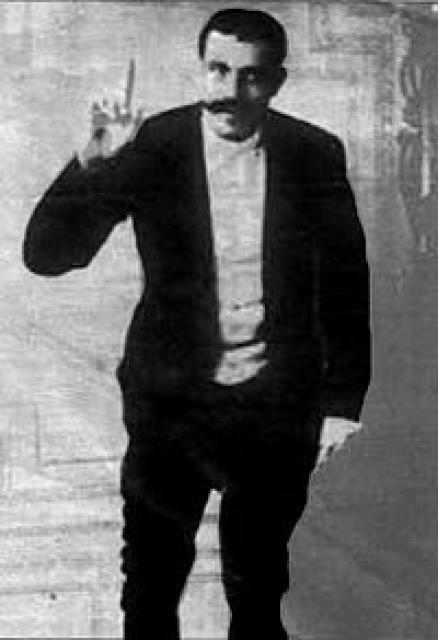
Le Petomane
 France
- Biography of Le Petomane
- Early Life and Discovery of Talent
- Stage Career and Popularity
- Later Years and Legacy
Biography of Le Petomane
Le Petomane, whose stage name was derived from the French verb "péter" meaning "to pass gas," was a French meteorist and variety artist. He gained fame for his unique control over his abdominal muscles, sphincter, and rectal muscles, which allowed him to inhale air and produce thousands of different sounds ranging from bird songs to artillery fire.
Early Life and Discovery of Talent
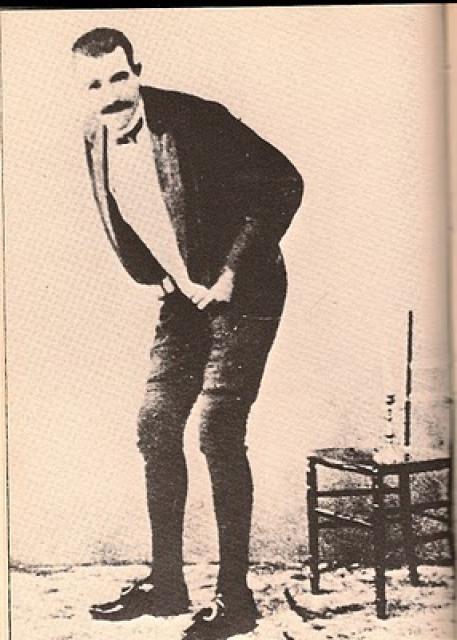
Joseph Pujol, later known as Le Petomane, was born on June 1, 1857, in Marseilles, France. He was one of five children in the family of sculptor François Pujol and his wife Rose. His unusual talent was discovered after he finished school. While swimming in the sea, he suddenly felt an unusual cold sensation in his rectum and rushed out of the water in horror. To his surprise, a thin stream of water ran down his leg from under his swimming trunks. Despite consulting several doctors, Joseph was found to have no abnormalities.

During his time in the army, Joseph began performing tricks for his fellow soldiers. He would first inhale water and then forcefully expel it from his rectum, sometimes reaching distances of several yards. Encouraged by his comrades, he started performing in Marseilles, and soon his fame spread throughout France. Joseph eventually moved to Paris, where he was invited to perform at the Moulin Rouge. His debut on stage took place in 1892.
Stage Career and Popularity
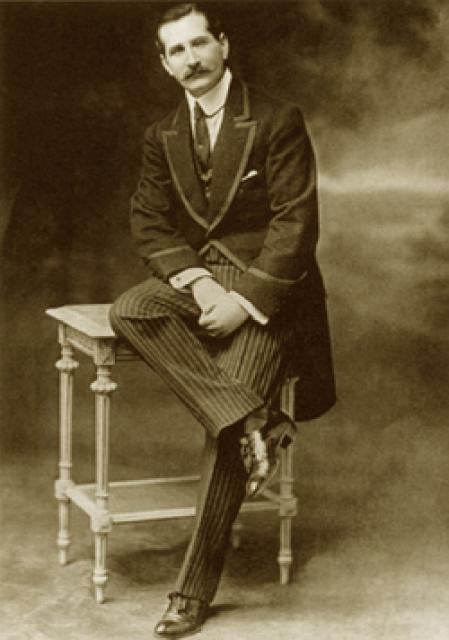
Le Petomane's performances at the Moulin Rouge became immensely popular with both Parisians and visitors to the city. His most famous acts included imitating the sounds of a torrential artillery fire and a storm. He also charmed audiences with his singing on the "octarine," a type of clay flute held tightly by his sphincter. It is said that Joseph could extinguish a candle from several yards away without any preparation.
Notable figures, including King Edward VII of the United Kingdom, King Leopold II of Belgium, and the renowned psychoanalyst and scientist Sigmund Freud, witnessed Le Petomane's performances. In 1894, the artist had a falling-out with the management of the Moulin Rouge and established his own theater, the Theatre Pompadour. Despite the exclusion of some performances deemed too provocative, Le Petomane continued to attract full houses.
Later Years and Legacy
In his later years, Le Petomane gained particular popularity with a brief sketch about a farm, where he accurately imitated the sounds of animals and people through his rectum. With the outbreak of World War I, he retired from the concert stage and opened a small bakery, where he occasionally entertained customers by mimicking the sounds of a playing orchestra from behind the counter or in the kitchen. Joseph Pujol passed away in 1945 at the age of 88.
The Paris University offered his family a significant sum of money in exchange for permission to study his body and perform an autopsy, but the relatives declined the offer. Two musicals, "The Fartiste" and "A Passing Wind," have been written about Joseph Pujol's life. His character has been depicted numerous times in films and theatrical productions worldwide.
Many of Le Petomane's relatives, taking advantage of his fame, migrated to the United States, and their descendants now live in Maryland, New York, and Virginia.


