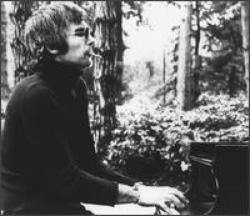
Lee Konitz
 USA
USA- Biography of Lee Konitz
- Early Career
- Cool Jazz and Collaborations
- Independent Career and European Tour
- Later Career
- Recognition and Legacy
Biography of Lee Konitz
Lee Konitz, an American jazz saxophonist, was born on October 13, 1927, in Chicago, Illinois, into a Jewish family. At the age of eight, he started playing the clarinet but soon switched his focus to the tenor saxophone. By the age of eleven, he had mastered both the clarinet and the saxophone, teaching himself through instructional books. Konitz attended Roosevelt College, where he began playing with local ensembles.

Early Career
Konitz began his professional career in 1945 with Teddy Powell's band, followed by collaborations with Jerry Wald. He gained recognition for his solo improvisations while playing in Claude Thornhill's orchestra. In 1948, Konitz joined Miles Davis' "Capitol Band", which further solidified his reputation as a prominent jazz saxophonist.

Cool Jazz and Collaborations
His performances with Miles Davis and Gil Evans laid the foundation for a new style known as "Cool Jazz." Konitz also collaborated with Lennie Tristano, Gil Evans, and Warne Marsh. In 1952, he performed in Toronto and later became the concertmaster of Stan Kenton's jazz ensemble, contributing to the recording of Kenton's famous album, "New Concepts of Artistry in Rhythm."
Independent Career and European Tour
In 1953, Konitz worked with Jerry Mulligan, and in 1954, he formed his own ensemble, performing in Boston and New York. In 1956, he embarked on a European tour with Hans Koller, Lars Gullin, and Zoot Sims. He spent a significant amount of time living in Southern Germany, collaborating with local musicians. By the early 1960s, Konitz briefly stepped away from music.
Later Career
After his hiatus, Konitz played with Bill Evans in the free jazz style and collaborated with Joe Henderson, Jim Hall, Eddie Gomez, and many others. In the late 1970s, he led the renowned "Nonet." Throughout the 1980s, Konitz formed his own groups and recorded with various record labels. Over the course of his musical career, he released over 150 jazz albums, exploring a wide range of musical genres, from cool bop to free philosophical improvisations. While he played both tenor and soprano saxophone, he always had a preference for the alto saxophone. His 1967 album, "The Lee Konitz Duets," recorded with different musicians, is considered a jazz classic.
Recognition and Legacy
In 1992, Konitz was awarded the prestigious Danish "Jazzpar" prize, often referred to as the "jazz Nobel Prize." He is regarded as the only jazz saxophonist who did not fall under the influence of the renowned Charlie Parker.