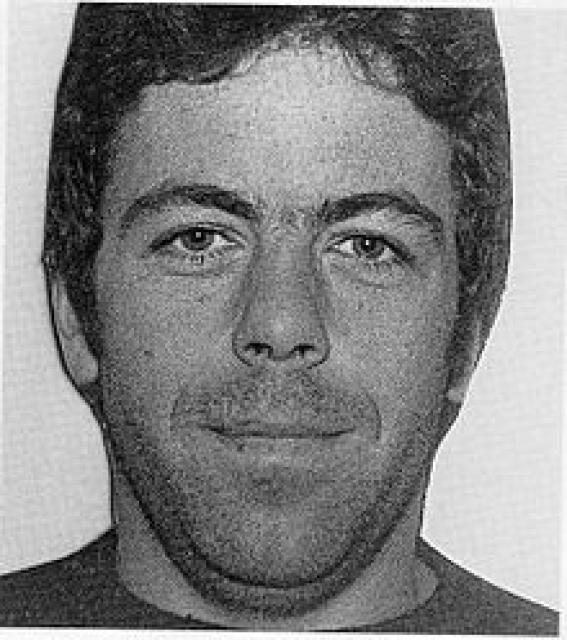
Lenny Murphy
 Ireland
Hugh Leonard Thompson Murphy, known as Lenny Murphy, was a Belfast loyalist paramilitary who led the Shankill Butchers, a gang responsible for a series of sectarian murders during the Troubles. Murphy’s story is inseparable from the violence inflicted on civilians in Belfast: the gang chiefly targeted Catholics chosen at random, while also killing people from within the loyalist community. He was never convicted for the gang’s murders, but was widely identified as its leader and was later believed to have committed further killings.
Early life and entry into loyalist paramilitarism
Murphy was born in Belfast on March 2, 1952, the youngest of three sons of William and Joyce Murphy. He grew up in the Shankill area, a predominantly Protestant and loyalist part of the city, and attended local schools. As a teenager he was involved in petty crime and street violence. In 1969, he joined the youth wing of the Ulster Volunteer Force (UVF), a loyalist paramilitary organization. During the unrest of the early Troubles, he took part in attacks on Catholic areas.
Murphy developed a reputation for intimidation and criminality. He joined loyalist racketeering and recruited men from his circle. In September 1972, he killed a man suspected by loyalists of supplying weapons to the Irish Republican Army. Murphy was arrested and tried for murder, but acquitted in 1973. He was immediately detained again and later received a three-year sentence connected to attempted escapes while awaiting trial. In 1975, he married Margaret Gillespie; they had a daughter.
The Shankill Butchers
After his release in May 1975, Murphy assembled a UVF gang based around the Shankill. The group became known as the Shankill Butchers for its killings of abducted civilians. Most victims were Catholic men selected at random in Belfast. The violence was part of the wider sectarian conflict, but the gang’s actions were particularly notorious for their cruelty and for the absence of any military purpose in many of the attacks. The group also killed loyalists in internal disputes and mistakenly attacked Protestant workers it had taken for Catholics.
In March 1976, Murphy was arrested after firing at two women. He admitted possessing a firearm and received a twelve-year prison sentence. While he was incarcerated, the gang continued to operate. A survivor of an attack in 1977 identified members, leading to a major investigation and the prosecution of the group. In February 1979, eleven members of the Shankill Butchers were convicted of a total of 19 murders and given a combined 42 life sentences. Murphy was not tried for those killings. Prosecutors did not consider it possible to bring a case against him based on the admissions of accomplices, and the proceedings referred to him as “Mr X.”
Release and death
Murphy was released from prison on July 16, 1982. He returned to racketeering and, according to the Dictionary of Irish Biography, is believed to have committed four further murders. On November 16, 1982, he was shot dead outside his girlfriend’s home in Glencairn, Belfast. The Provisional IRA claimed responsibility. The killing was also widely suspected to have involved loyalist collusion, though those suspicions were not established in court.
Murphy’s life and the crimes of the gang he led remain among the starkest examples of sectarian violence in Northern Ireland. His victims were civilians, and his notoriety rests on the terror the group inflicted on Belfast communities. The 1979 convictions brought many members of the gang to justice, but Murphy himself died before facing trial for the murders attributed to the Shankill Butchers.


