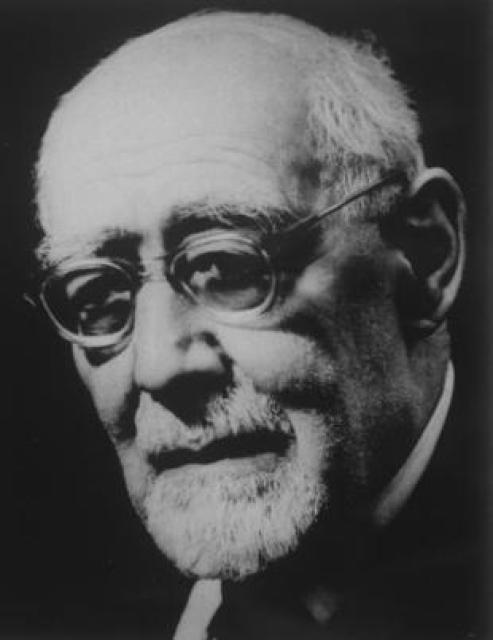
Leo Baeck
 Poland
- Leo Baeck: A German-Polish Leader in Progressive Judaism
- A Transformative Publication
- Service and Leadership
- The Reichsvertretung
- Deportation to Theresienstadt
- Post-War Legacy
- Publications and Honors
- Legacy
Leo Baeck: A German-Polish Leader in Progressive Judaism
Early Life and EducationLeo Baeck was born in 1873 in Lissa (now Leszno, Poland), then part of the German province of Posen. The son of a rabbi, he began his education at a yeshiva in Breslau (now Wrocław) in 1894. He also studied philosophy in Berlin under Wilhelm Dilthey and served as a rabbi in congregations in Oppeln, Düsseldorf, and Berlin.
A Transformative Publication
In 1905, Baeck published "The Essence of Judaism," a response to "The Essence of Christianity" by Adolf von Harnack. This work reinterpreted Judaism through the lens of neo-Kantianism, challenging religious existentialism and offering Jews a new perspective on their faith.
Service and Leadership
During World War I, Baeck served as a chaplain in the German Imperial Army. In 1933, after the election of the Nazi Party, he became president of the Reichsvertretung der deutschen Juden (Representation of German Jewry), an organization that represented German Jews from 1933 to 1938.
The Reichsvertretung
The Reichsvertretung's actions came under criticism, with some arguing that its decision to cooperate with the Nazis was misguided and led Jews down a path of self-destruction. However, Baeck defended the Reichsvertretung's actions, arguing that they were done in an attempt to protect German Jews and mitigate the effects of Nazi persecution.
Deportation to Theresienstadt
Baeck led the Reichsvertretung until his deportation to Theresienstadt on January 27, 1943. Although he played no official role in the ghetto's administration until the very end, he remained a spiritual leader and symbol of hope for the thousands of Jews imprisoned there.
Post-War Legacy
After the liberation of Theresienstadt in 1945, Baeck became the head of the Jewish community as Chief Elder. He relocated to London, where he became president of the Hampstead Reform Synagogue. He also taught at the Hebrew Union College in America and became president of the World Union for Progressive Judaism.
Publications and Honors
Baeck published his second major work, "This People Israel," after the war. In 1955, the Leo Baeck Institute for the Study of the History and Culture of German Jewry was founded, with Baeck serving as its first international president. He also received numerous honors, including the naming of asteroid 100047 Leobaeck in his honor.
Legacy
Leo Baeck died on November 2, 1956, in London. His legacy as a German-Polish rabbi, academic, and leader in progressive Judaism continues to inspire Jews and non-Jews alike. His contributions to Jewish thought, his leadership during difficult times, and his commitment to dialogue and understanding remain a source of inspiration for generations to come.




