Meister Eckhart
 France
Meister Eckhart: A Medieval German Theologian and Philosopher
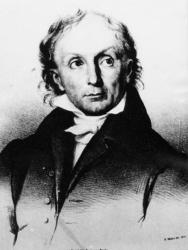
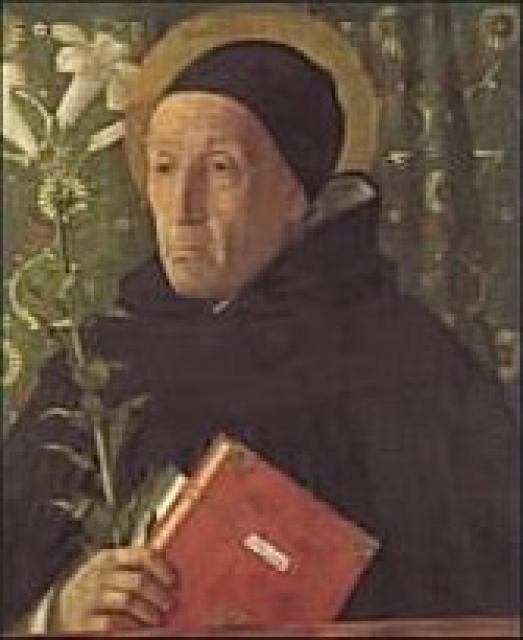
Meister Eckhart, a renowned medieval German theologian and philosopher, was one of the greatest Christian mystics who taught about the presence of God in all existence. The title 'Meister,' meaning "master" or "teacher" in German, indicates his academic degree as a master of theology (Magister in theologia) earned in Paris.
Born into a noble family in Hochheim around 1260, Eckhart joined the Dominican order and received education in Dominican schools. He became a master of theology in 1302 and studied at the University of Paris. From 1303 to 1311, he served as the provincial prior of the Dominican order in Saxony. Starting from 1311, he became a professor in Paris, then in 1313 in Strasbourg, and finally in 1320, he became a lecturer in Cologne.
Eckhart authored sermons and treatises, most of which have been preserved in the writings of his students. The main theme of his reflections was the concept of the Godhead as an impersonal absolute, standing beyond God. The Godhead is incomprehensible and inexpressible; it is the "pure purity of divine essence" where there is no movement. Through self-knowledge, the Godhead becomes God. God is eternal being and eternal life. According to Eckhart's conception, humans are capable of knowing God because the human soul contains a "divine spark," a particle of the Godhead. By suppressing their will, individuals must passively surrender to God. Then, the detached soul will ascend to the Godhead and, in mystical ecstasy, transcend the earthly realm and merge with the divine. Bliss depends on the inner self-activity of the individual.
The Catholic doctrine could not fully accept Eckhart's concepts. In 1327, a papal bull declared 28 propositions of his teachings as false. Nevertheless, Eckhart played a significant role in the development of German Christian mysticism, foreshadowed Hegel's idealistic dialectic, and contributed to the formation of the literary German language. He was the teacher of Johannes Tauler and Henry Suso, and his teachings greatly influenced Martin Luther. In the twentieth century, the question of Eckhart's rehabilitation was raised in the Vatican.