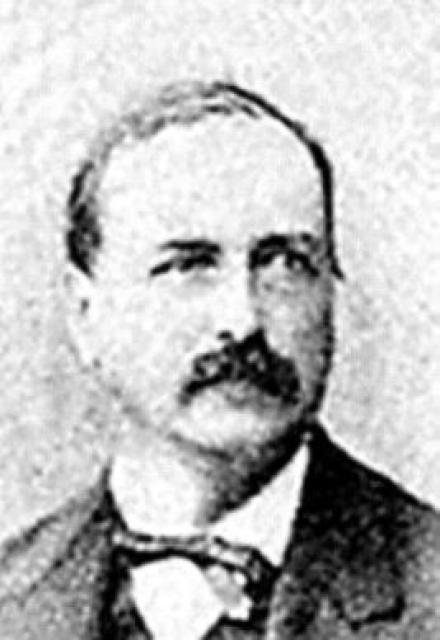
Leon Louis Lalanne
 France
- Early Life and Education
- Engineering Career
- Railroad Construction
- Administrative and Scientific Leadership
- Léon Lallanne passed away on March 13, 1892, at the age of 80.
- Numerical Analysis and Computing
Early Life and Education
Léon Louis Chrétien was born in Paris on July 3, 1811, to François Julien Léon Chrétien, a physician, and Aurore Marie Damar Langlois. In 1820, he adopted the surname Lallanne-Chrétien, later omitting Chrétien for practical use and becoming simply Léon Lallanne. His brother, Louis Lallanne (1815-1898), became a renowned historian.
Léon attended the Lycée Louis-le-Grand, where he was a classmate of Évariste Galois. In 1829, he entered the École Polytechnique in Paris, followed by the École Nationale des Ponts et Chaussées in 1831.
Engineering Career
After graduating, Lallanne embarked on a career as a civil engineer, predominantly in Northern France (1832-1843). In 1837, he visited southern Russia at the invitation of Anatoly Demidov. From 1839 onwards, he worked with his future father-in-law, Jean-Claude Arnoux, on the Canal des Lignes-de-Soie.
During the 1848 Revolution, Lallanne served as one of the leaders of the National Workshops and commanded a battalion of the Garde Nationale in Paris during the civil disturbances.
Railroad Construction
As a civil engineer, Lallanne's most notable contributions were in the construction of railroads in Spain, Switzerland, and Wallachia, where he first visited in 1852. From 1853 onwards, he oversaw the construction of railway lines in France (part of the route to Strasbourg, the Ardennes, Boulogne, and Calais), in Switzerland (1856-1860, the western rail network), and in Northern Spain (1860-1861, the Córdoba-Seville route). He made a second visit to Wallachia in 1856.
Administrative and Scientific Leadership
In 1867, Lallanne became a General Inspector and, in 1876, Director of the École Nationale des Ponts et Chaussées. He participated in projects along the Danube in Budapest, designed a bridge in Silistra, and worked on border demarcation in accordance with the Treaty of Berlin (1878).
In 1879, Lallanne became a member of the French Academy of Sciences and retired in 1881. He was made a Grand Officer of the Legion of Honour on January 18, 1881. In 1883, he became a Life Senator, aligning himself with the moderate Left. In 1882, he chaired the board of directors of the Compagnie des Omnibus de Paris, which held a monopoly on public transport in Paris.
Léon Lallanne passed away on March 13, 1892, at the age of 80.
Scientific ContributionsTransportation and Population Geography
Lallanne is considered one of the founders of the French and Belgian railway systems. He invented and disseminated a graphical method for optimizing road design, known as the Lallanne sketch. He clarified the distinction between an isopleth (isolines) and an isopleth (pseudo-isolines). In 1845, he created maps with contours of population density, pronouncing the "equilateral law" — an equal distance between central towns, which he observed in France, long before Walter Christaller's theory of central places.
In his works on transportation routes and population distribution, Lallanne became one of the founders of the transportation hierarchy model. Together with Maurice d'Ocagne, Lallanne is credited with inventing the nomogram, intended to replace the logarithmic ruler. In an 1846 article, Lallanne explored the ideas of anamorphosis and the use of projective transformations, which had applications in solving cubic equations. He named this nomographic device the "abaque." This "universal calculator" had 60 functions, realized graphically. Half a century later, Maurice d'Ocagne provided a general theory, based on projective geometry, for the nonlinear scales connected by the nomograph.
Numerical Analysis and Computing
In 1840, Lallanne invented a mechanical computer capable of solving polynomial equations numerically up to the seventh degree. The universal calculator used a graph with a double logarithmic scale. Charles Darwin, in his manuscript "Natural Selection" (1859), utilized Lallanne's work on the geometry of bee cells (1840). In 1830, he designed a polar diagram that represented the force of ocean winds.


