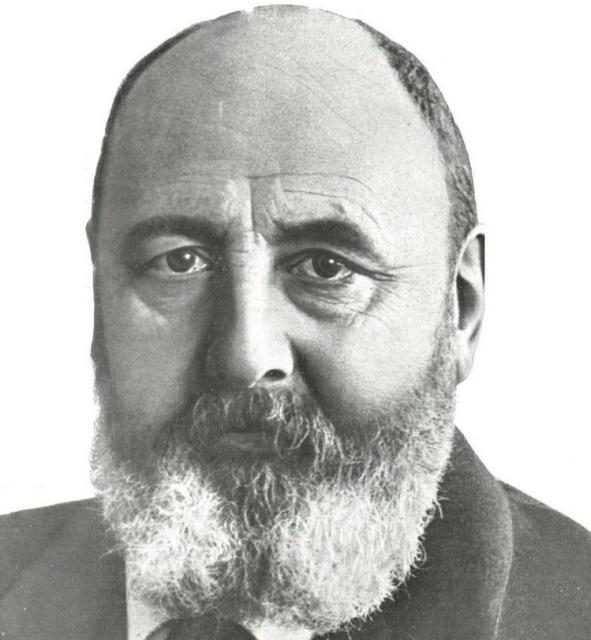
Leonardo Torres Quevedo
 Spain
Spain- Leonardo Torres y Quevedo: Early Life and Education
- Early Career and Engineering Travels
- Cultural Engagement and Scientific Contributions
- Honors and Legacy
Leonardo Torres y Quevedo: Early Life and Education
Born on December 28, 1852, in Santa Cruz de Iguña, Cantabria, Spain, Leonardo Torres y Quevedo was the son of a railway engineer. His family lived primarily in Bilbao, where his father worked, and he spent time in his mother's family home in the mountainous region of Cantabria. He began his studies in Bilbao but completed them in Paris, where he attended the last two years of school.
In 1870, his father was transferred to Madrid, and the family relocated. That same year, Torres y Quevedo entered the Official School of the Corps of Road Engineers. He briefly paused his studies in 1873 to volunteer in the defense of Bilbao, which was under siege by Carlist forces during the Second Carlist War. Upon returning to Madrid, he completed his education in 1876.
Early Career and Engineering Travels
Torres y Quevedo began his career with the same railway company as his father and promptly embarked on an extensive tour of Europe to witness firsthand the scientific and engineering advancements of the time, particularly in the emerging field of electricity. Returning to Spain, he settled in Santander and dedicated himself to research, a pursuit he would never abandon. The fruits of his investigations manifested in his first scientific publication in 1893.
Cultural Engagement and Scientific Contributions
In 1889, Torres y Quevedo moved to Madrid and became an active participant in the city's cultural scene. He created and directed the Laboratory of Applied Mechanics at the Ateneo de Madrid, which focused on producing scientific instruments. The same year, he became a member of the Spanish Royal Academy of Sciences, serving as its president in 1910.
In the early 1900s, Torres y Quevedo learned the international language Esperanto and became a lifelong advocate for it. In 1916, he was awarded the Echegaray Medal, the highest scientific honor bestowed by the Spanish Royal Academy of Sciences. Despite being offered the post of Minister of Development in 1918, Torres y Quevedo declined.
In 1920, he took a seat in the Royal Spanish Academy, succeeding Benito Pérez Galdós, and became a member of the Mechanics Division of the French Academy of Sciences. The Sorbonne named him an honorary doctor in 1923, and in 1927, he was named one of twelve Associate Members of the Academy. From 1922 to 1926, Torres y Quevedo participated in the work of the International Committee on Intellectual Cooperation of the League of Nations.
Honors and Legacy
Throughout his lifetime, Leonardo Torres y Quevedo received numerous honors and awards, including Spanish orders and the rank of Commander in the Order of the Legion of Honor. Some of his inventions (including working prototypes) are displayed in Madrid's Museo de Leonardo Torres y Quevedo. The inventor passed away on December 18, 1936, in Madrid, in the midst of the Spanish Civil War. He was married from 1885 and had eight children. Google commemorated the 160th anniversary of Torres y Quevedo's birth on December 28, 2012, with a Google Doodle.


