
Leonid Hurwicz
 USA
USA- Biography of Leonid Gurvich
- Early Life and Education
- Personal Life
- Academic Career
- Contributions and Achievements
Biography of Leonid Gurvich
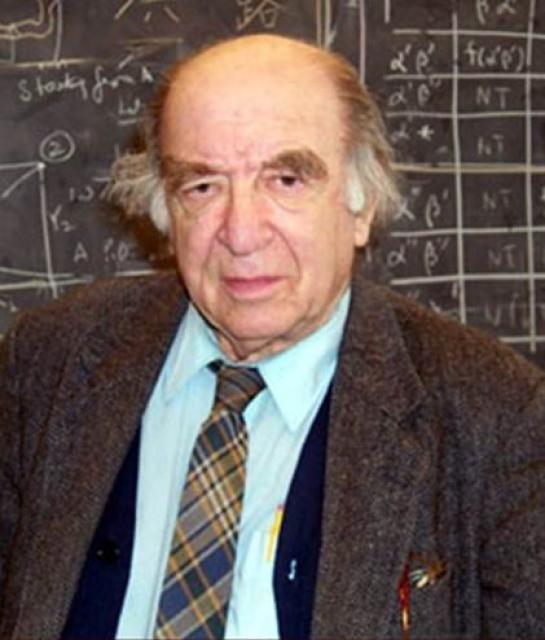
Leonid 'Leo' Gurvich was an American economist and mathematician originally from Russia. As of 2011, Gurvich was the oldest Nobel laureate, receiving the prize at the age of 90. He was awarded the Nobel Prize in 2007, along with Eric Maskin and Roger Myerson, for their work on the theory of optimal mechanisms. Gurvich was an honorary professor of economics at the University of Minnesota and one of the first to recognize the value of game theory, becoming a pioneer in its application.
Early Life and Education
Leonid 'Leo' Gurvich was born on August 21, 1917, in Moscow, Russia, to a Jewish family from Poland, just a few months before the October Revolution. Gurvich and his family faced persecution from both the Bolsheviks and the Nazis when Hitler invaded Poland in 1939. His parents and brother fled to Warsaw, but they were captured and sent to Soviet labor camps. In 1938, Gurvich graduated from Warsaw University and finally immigrated to the United States in 1940. His family members later joined him.
Personal Life
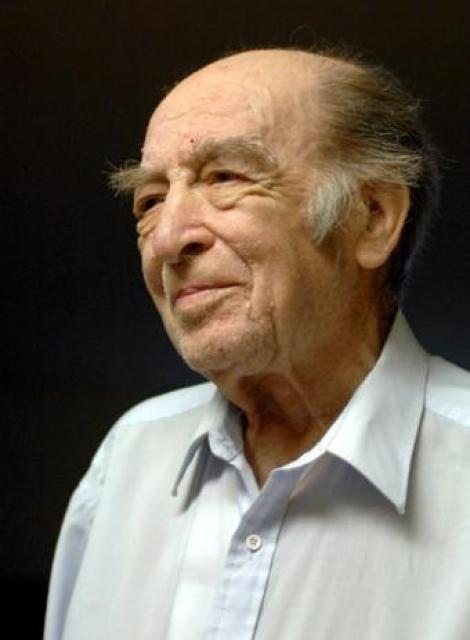
Gurvich met Evelyn Jensen, who grew up on a farm in Wisconsin, in 1944. They married that same year and lived in Minneapolis, Minnesota, raising their four children: Sarah, Michael, Ruth, and Maxim. Outside of economics, Gurvich had interests in linguistics, archaeology, biochemistry, and music. He conducted research in meteorology and served on the National Science Foundation (NSF) committee on weather modification. In 1968, when Eugene McCarthy ran for President of the United States, Gurvich represented McCarthy's interests in Minnesota at the Democratic Party convention and was a member of the "walking subcaucus" committee, which still influences the allocation of delegates among competing groups in political parties.

Academic Career
In 1941, Gurvich became a research assistant to Paul Samuelson at the Massachusetts Institute of Technology and Oskar Lange at the University of Chicago. From 1942 to 1944, he was a faculty member at the Institute of Meteorology at the University of Chicago, teaching statistics in the economics department. Gurvich received a Guggenheim Fellowship in 1945-1946. In 1946, he became an adjunct professor of economics at Iowa State College, and from October 1950 to January 1951, he served as a consultant for the Cowles Commission, finally leaving in 1961.
Thanks to Walter Heller, in 1951 Gurvich joined the University of Minnesota as a professor of economics and mathematics in the School of Business Administration. He dedicated much of his career to this school while also conducting research and teaching in other places in the United States and Asia. Gurvich published his work on resource allocation optimality and information efficiency processes in 1959. He taught at Bangalore University in 1965 and made lasting contributions to Tokyo University, People's University in China, and the University of Indonesia in the 1980s.
In the United States, Gurvich was a visiting professor at Harvard in 1969, the University of California, Berkeley in 1969, Northwestern University in 1988 and 1989, and the University of California, Santa Barbara in 1998. Before temporarily teaching at the University of Michigan in 2002, Gurvich was a distinguished visiting professor at the University of Illinois in 2001.
Contributions and Achievements
In 2007, while working at the University of Minnesota, Gurvich presented his current research, describing it as a "comparison and analysis of systems and methods for organizing the economy, welfare economics, social choice theory implementation, and economic institution modeling." Gurvich made significant contributions to the field of economic theory, particularly in the areas of economic mathematics, modeling, and firm theory.
He pioneered the application of economic models to analyze systems such as capitalism and socialism, which had previously been avoided by early economists. His theory of stimulus compatibility explained why centrally planned economies can fail and how incentives for individuals affect decision-making.
Gurvich was elected a fellow of the Econometric Society in 1947 and served as its president in 1969. He became a member of the American Academy of Arts and Sciences in 1965 and the National Academy of Sciences in 1974. In 1977, he was honored as an honorary fellow of the American Economic Association. In 1990, he received the National Medal of Science from President George H. W. Bush for his pioneering work on modern decentralized mechanism design.
In mid-July 2008, Gurvich was hospitalized with kidney failure and passed away a week later in Minneapolis. His name is associated with the Gurvich coefficient of optimism-pessimism, which is used in decision theory.


