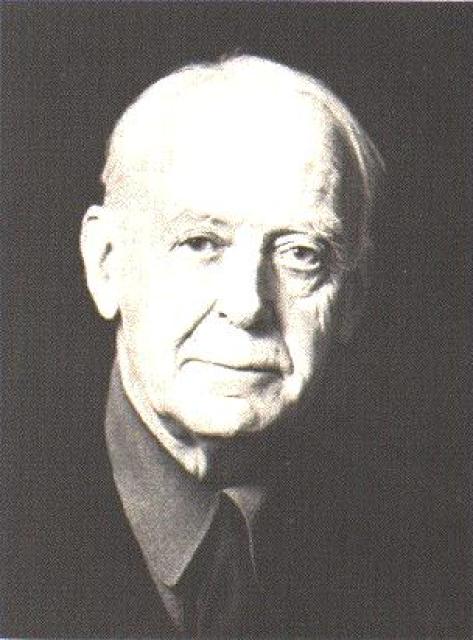
Colin Clark
 Great Britain
Biography of Colin Grant Clark
Colin Grant Clark was a British and Australian economist and statistician who is best known for being the first to use Gross National Product (GNP) as a measure of national economic performance. He was born on November 2, 1905, in London and received his education at the prestigious Dragon School in Oxford. He then went on to Winchester College and Brasenose College, Oxford, where he earned a degree in chemistry in 1928.
Clark began his career as a junior research fellow at the London School of Economics in 1928-1929, working with William Beveridge. He then worked with Sir Alexander Carr-Saunders and Allyn Young at the University of Liverpool in 1929-1930. During this time, he also ran as a Labour Party candidate for several parliamentary seats, but was unsuccessful. However, his work impressed John Maynard Keynes, who secured him a lecturer position in statistics at Cambridge University.
From 1931 to 1938, Clark taught statistics at Cambridge and published three books: "The National Income 1924-31," "The Economic Position of Great Britain" with A.C. Pigou, and "National Income and Outlay." His first book was recommended for publication by Keynes, who described Clark as a genius in the field of economic statistics. In 1937 and 1938, Clark accepted a position in the Queensland Government in Australia, where he served as an economic adviser to the premier. He also converted to Catholicism during this time.
In 1938, Clark became the Government Statistician, Director of the Bureau of Industry, and financial advisor to the Treasury of Queensland. He held various government positions until 1947, when he became the Deputy Minister of the Queensland Department of Labour and Industry. Despite his government work, Clark continued his academic research and published numerous articles on economics. His book, "Conditions of Economic Progress," was published in 1940.
In 1951, Clark worked at the Food and Agriculture Organization in Rome and then at the University of Chicago before becoming the director of the Institute for Agricultural Economics at Oxford University from 1952 to 1969. He returned to Australia in 1969 as the director of the Institute of Economic Progress at Monash University. He later served as a consultant at the University of Queensland until his death in 1989.
Clark was recognized for his contributions to economics and development and was named a pioneer in economic development by the World Bank in 1984. In 1987, he became the first recipient of the Distinguished Fellow award from the Economic Society of Australia, along with Professor Trevor Swan. Clark's work played a crucial role in the development of macroeconomics and greatly influenced Keynesian economics.
Colin Grant Clark passed away in 1989 and was buried at Mount Gravatt Cemetery in Brisbane, Australia. He was survived by eight sons, one daughter, and forty grandchildren. His contributions continue to be celebrated through an annual lecture that highlights his impact on economics and his integral role in the Keynesian approach.


