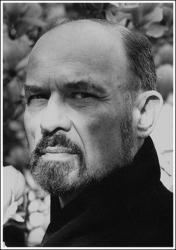
Leonid Zankov
- Leonid Vladimirovich Zankov (1901 - 1977)
- Doctoral Dissertation and Research
- Academic Appointments
- Head of the Laboratory of Learning and Development
- Publications
- "Memory of a Schoolchild" (1944)
Leonid Vladimirovich Zankov (1901 - 1977)
Early Life and CareerLeonid Vladimirovich Zankov was a prominent Soviet psychologist born in 1901. From 1918 to 1923, he worked as a teacher, educator, and head of an agricultural children's colony. During this period, he became a student of renowned psychologist Lev Semenovich Vygotsky.
Doctoral Dissertation and Research
In 1940, Zankov defended his doctoral dissertation on the psychology of reproduction. His research focused on the mechanisms by which individuals recall and retrieve information.
Academic Appointments
Zankov held several esteemed positions throughout his career. He served as:
Director of the Institute of Defectology, USSR Academy of Pedagogical Sciences
Deputy Director of the Institute of Theory and History of Pedagogy, USSR Academy of Pedagogical Sciences
Head of the Laboratory of Learning and Development
Contributions to PsychologyZankov was a respected expert in the field of defectology, studying the development of children with disabilities. His research identified effective teaching methods for these students. He also investigated the role of instruction in the development of pupils, particularly the interaction between verbal and visual demonstrations in learning.
Publications
Zankov's significant contributions to the field of psychology are reflected in his publications, including:
"Memory of a Schoolchild" (1944)
"Memory" (1949)"Learning and Development" (1975)
Legacy
Leonid Vladimirovich Zankov's work has left a lasting impact on the field of psychology. His research and theories have shaped the understanding of memory, learning, and the development of children with disabilities. His contributions continue to be studied and applied by educators and psychologists today.