Leonora Carrington
 Great Britain
Biography of Leonora Carrington
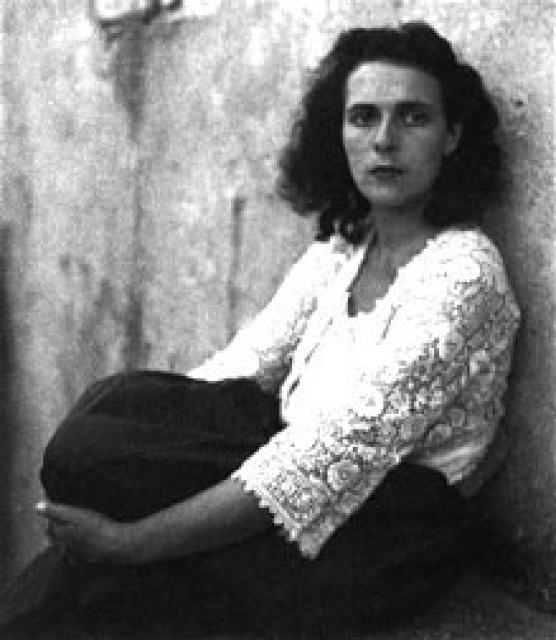
Leonora Carrington was an English artist, sculptor, and writer, who worked in English, French, and Spanish. She was born into a wealthy family, with her maternal lineage being Irish. She was raised by an Irish nanny and frequently visited her grandmother in Ireland. Carrington studied painting in Florence and attended an art school in Chelsea. In 1936, she enrolled in the London Academy of Painting.
In 1937, Carrington met Max Ernst and abandoned everything to move with him to Paris. She became involved with the Surrealists and participated in group exhibitions in Paris and Amsterdam in 1938. However, after Ernst's arrest in 1939 by the French authorities as an enemy national, Carrington experienced a nervous breakdown. To escape the Nazi occupation, she moved to Spain, where she suffered another breakdown and was placed in a psychiatric clinic in Santander. She later wrote about her experiences in the stories "Down Below" and "The Stone Door".
In 1941, Carrington escaped from the clinic with the help of a nanny who arrived on a submarine, as described in her autobiography and confirmed by most biographers. She fled to Portugal and then to the United States before finally settling in Mexico in 1942. Carrington formed friendships with artists Remedios Varo and Frida Kahlo, as well as writers Octavio Paz, Carlos Fuentes, and Alejandro Jodorowsky, who directed a play she wrote called "Penelope".
Carrington also worked on the fresco "The Magical World of the Maya" for the National Museum of Anthropology. In the 1960s, she appeared in several films and worked as a costume designer for Mexican film director Juan López Moctezuma's "The House of Madness" (1973). Her paintings, prose, and plays were filled with motifs from Celtic and Central American mythology, dreamlike fantasy, and grotesque humor, reflecting her interest in the "marvelous in the everyday" that was central to Surrealism.