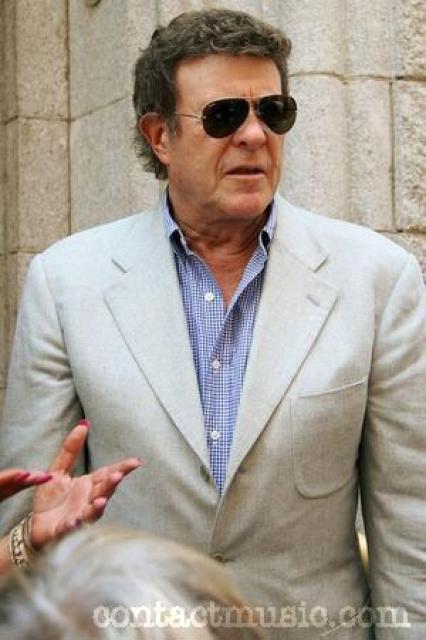
Les Crane
 USA
USABiography of Les Crane
Les Crane was an American radio and television host, known for his pioneering work in interactive broadcasting. He was born Leslie Stein on December 3, 1933. The exact location of his birth is unclear, with conflicting reports suggesting either Long Beach, New York, Bronx, or San Francisco. He graduated from Tulane University in New Orleans with a degree in English. Afterward, he served in the United States Air Force for four years, piloting jet planes and working as a helicopter flight instructor.
Radio Career
Crane's radio career began at KONO in San Antonio and WPEN in Philadelphia. By 1961, his knack for generating lively debates made him a popular host on KGO in San Francisco. KGO's programs reached audiences as far as Seattle and Washington, D.C., and Crane became one of the pioneers of radio talk shows. While he both fascinated and irritated his listeners and callers with his direct and candid style, his show attracted a significant following. Crane's program aired from 11 pm to 2 am on weekdays, and in collaboration with the "hungry i" nightclub, he interviewed rising stars like Barbra Streisand and stand-up comedy veterans like Irwin Corey, known as "The Professor." Crane rapidly fired off questions, discussing politics and other social topics, and often repeated the studio phone number and the fact that he was only 27 years old.
Television Career
Crane and KRLA radio station director John Barrett are credited with the idea of creating the "Top 40" popular music countdown. In August 1963, Crane accepted an offer to host an evening talk show on ABC and moved to New York. The program premiered in mid-September as "Nightlife" and was renamed "The Les Crane Show" the following year. The channel hoped to compete with NBC's Johnny Carson but fell short of that goal. Critics had mixed opinions about Crane's aggressive and provocative hosting style but agreed that he excelled at asking challenging questions without offending his guests. It was on his show that "The Rolling Stones" made their first TV appearance, and he interviewed many famous artists, leading politicians, and public figures, including British actor Richard Burton, Baptist preacher Martin Luther King Jr., civil rights activist Malcolm X, Alabama Governor George Wallace, who ran for president four times, and Senator Robert F. Kennedy, the younger brother of President John F. Kennedy.
Crane was also known for his support of organizations fighting for civil rights.
Acting Career and Later Years
Crane, a tall and attractive man, briefly pursued an acting career, appearing as a guest star in several television series, including "Burke's Law" and "The Virginian," as well as the film adaptation of Norman Mailer's classic American novel "An American Dream." In 1968, Crane returned to the West Coast and became a talk show host in Los Angeles, where he discussed topics such as civil disobedience, the hippie movement, and the growing popularity of meditation. In 1980, he unexpectedly ventured into software development and became the CEO of "The Software Toolworks," the creator of the popular chess game "Chessmaster," computerized versions of ping pong, and typing tutor software. After ten years, "Toolworks" was sold and rebranded as "Mindscape."
Crane was married five times, with his third wife being Tina Louise, an actress from the cult American TV series "Gilligan's Island." They married in 1966 and divorced in 1974, and their daughter Caprice Crane was born on November 1, 1970. Caprice became a writer, screenwriter, and television producer, involved in creating youth-oriented series like "Melrose Place" and "90210," as well as MTV award ceremonies and the film "Love, Wedding, Marriage." Crane's final marriage was to Ginger Crane, which lasted for 20 years until his death.
Les Crane passed away on July 13, 2008, at the age of 75, from natural causes.


