Lev Kafengauz
 Russia
- Early Life and Education
- Political Career
- Opposition to the Bolsheviks
- Economic Reforms Proposal
- Arrest and Later Career
Early Life and Education
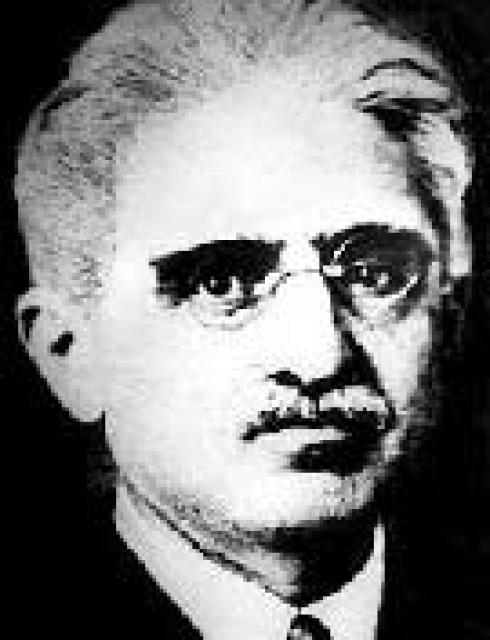
Lev Borisovich Kafengaus (Leon) was born in 1885 into a servant's family. He became involved in a Marxist circle in 1904 and joined the Bolshevik organization in Moscow in 1905-06. Subsequently arrested for his involvement in the December Armed Uprising, Kafengaus was placed under police surveillance in 1906.
After graduating from the economics department of Moscow University in 1910, Kafengaus was retained in the Faculty of Political Economy to prepare for a professorship. However, he was dismissed in March 1911 for participating in a strike protesting the actions of Minister of Education L.A. Kasso.
Political Career
Kafengaus later transitioned to Menshevik positions and distanced himself from active political involvement. He worked as an assistant in the statistics department of the Moscow City Administration and as an assistant in the Moscow Commercial Institute. He also headed the statistics department of the Moscow Fuel Commission.
Following the February Revolution in 1917, Kafengaus joined the Moscow Menshevik organization and became a member of the editorial staff of the newspaper "Vlast Naroda." He criticized V.I. Lenin's April Theses, believing that they would transform the Bolshevik faction of the RSDRP into a party of anarchist-communists.
Kafengaus served as an elected member of the Moscow City Duma in summer 1917, and in August, he became deputy minister of trade and industry in the Provisional Government.
Opposition to the Bolsheviks
After the October Revolution, Kafengaus condemned the Bolsheviks' economic policies and their conclusion of a separate peace with Germany, which he believed represented a betrayal of Russia's interests. He argued that the Bolsheviks had usurped power and advocated for its return to the Constituent Assembly.
Kafengaus was particularly critical of Lenin's financial and agricultural policies, which he predicted would lead to economic ruin. He also opposed the nationalization of major industries, arguing that it would further exacerbate the country's economic crisis.
Economic Reforms Proposal
In 1919, Kafengaus and economist Ya.M. Bukshpan drafted a program for Russia's economic recovery in the event of the Soviet government's collapse. The program proposed the restoration of private enterprise, gradual denationalization and demonopolization of industry, the introduction of market relations, the development of farming, and the attraction of foreign capital under state control.
Arrest and Later Career
Kafengaus was arrested in 1920 on suspicion of belonging to the "National Center" counter-revolutionary organization but was later released due to lack of evidence. He resumed his work in the Central Statistics Department of the Supreme Council of National Economy (VSNKh) while also teaching at Moscow University.
In 1930, Kafengaus was arrested again and sentenced to exile in Ufa. He was rehabilitated in 1987. From 1933 to 1937, he lectured at the Industrial-Economic Institute named after G.K. Ordzhonikidze and headed a department at the Institute of Steel named after I.V. Stalin. He became a professor at the First Moscow State University and served as deputy editor-in-chief of the "Technical Encyclopedia."
In 1937, Kafengaus became a senior research fellow at the Institute of Economics of the USSR Academy of Sciences, where he remained until his death in 1940.