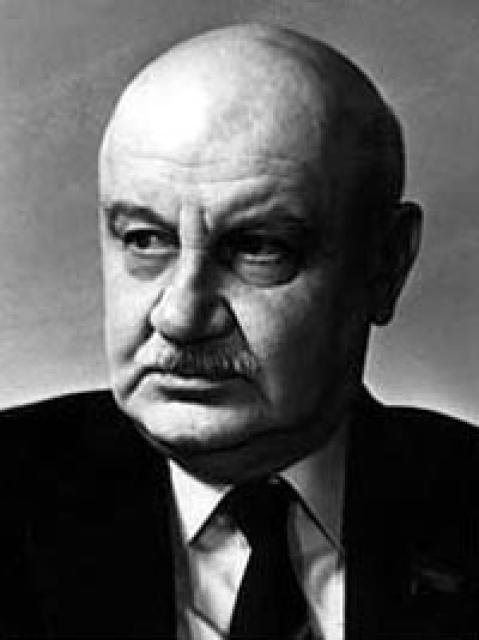
Lev Kulidjanov
 Russia
- Introduction
- Early Life and Education
- Early Career
- Breakthrough with "Father's House"
- A Trio of Masterpieces
- Later Career and Legacy
- Administrative and Social Role
- Honors and Accolades
- Personal Life and Family
- Conclusion
Introduction
Lev Alexandrovich Kulidzhanov, a renowned Soviet film director, left an indelible mark on the cinematic landscape with his poignant and thought-provoking films.
Early Life and Education
Born in Tbilisi in 1924, Kulidzhanov's early years were shaped by the hardships of wartime. His passion for the arts emerged at a young age, particularly through theater. At school, he took on the roles of playwright, actor, and director in amateur productions. This multifaceted experience ignited his determination to pursue a career in filmmaking.
In 1955, Kulidzhanov graduated from the prestigious Gerasimov Institute of Cinematography (VGIK) in Moscow. During his studies, he developed a keen eye for psychological depth and a commitment to artistic integrity.
Early Career
Upon graduating from VGIK, Kulidzhanov joined the Gorky Film Studio as a director. His first two films, "This Is How It Began..." (1956) and "The House Where I Live" (1957), were co-directed with Yakov Segel, a common practice among aspiring filmmakers of the mid-1950s.
Breakthrough with "Father's House"
In 1959, Kulidzhanov's career gained momentum with the release of "Father's House," which earned widespread critical acclaim. The film's realistic portrayal of rural life and its focus on the human condition solidified Kulidzhanov's reputation as a master of emotional storytelling.
A Trio of Masterpieces
In the early 1960s, Kulidzhanov directed a trilogy of films that cemented his legacy in the pantheon of Soviet cinema. "When the Trees Were Tall" (1961), a poignant exploration of nostalgia and lost innocence, remains one of his most beloved works. "The Blue Notebook" (1963) delved into the complexities of youth and the search for identity.
Later Career and Legacy
Throughout his career, Kulidzhanov continued to produce notable films, including the epic "Crime and Punishment" (1969), the historical drama "Starry Minute" (1975), and the biographical piece "Karl Marx: Young Years" (1980).
Administrative and Social Role
Beyond his filmmaking prowess, Kulidzhanov also played a significant role in the administrative and social spheres of the Soviet film industry. He served as the head of the State Cinema Committee (1963-1964), chairman of the Organizing Committee of the Union of Cinematographers (1964), and first secretary of the Union's board (1965-1986).
Honors and Accolades
Kulidzhanov's contributions were recognized with numerous honors, including the titles of People's Artist of the USSR (1976) and Hero of Socialist Labor (1984). He was also awarded the Order of Lenin twice, the Order of the October Revolution, and orders from Hungary and Bulgaria.
Personal Life and Family
Kulidzhanov was married to Natalia Fokina, a film screenwriter and professor at VGIK. Together, they had two sons: Alexander (1950), a cinematographer, and Sergei (1957), a candidate of historical sciences.
Conclusion
Lev Alexandrovich Kulidzhanov's legacy as a film director is characterized by his deep understanding of human nature, his ability to evoke powerful emotions, and his commitment to artistic excellence. His films continue to resonate with audiences, capturing the complexities and joys of the human experience.


