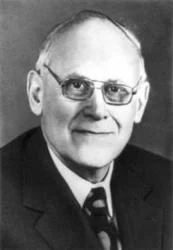
Lev Landau
- Early Life and Scientific Training
- Research and Teaching
- Arrest and Return to Science
- Nobel Prize and Later Years
- Legacy
Lev Landau was a Soviet theoretical physicist whose work reshaped several branches of physics, from quantum mechanics and magnetism to superconductivity and fluid dynamics. Born in Baku in 1908, he became a leading teacher and research leader in the Soviet Union. His theory of superfluidity in liquid helium earned him the 1962 Nobel Prize in Physics.
Early Life and Scientific Training
Landau was born on 9 January 1908 in Baku, then part of the Russian Empire. A gifted student, he studied at Baku State University and later at the Leningrad State University, where he completed his physics education by the age of nineteen. He continued at the Leningrad Physico-Technical Institute and in 1929 received a fellowship that allowed him to visit leading European research centers.
In Copenhagen, he worked with Niels Bohr, whose institute brought together some of the most prominent physicists of the period. Landau’s time abroad strengthened his commitment to theoretical physics and influenced his demanding approach to scientific training.
Research and Teaching
Landau made important contributions across a wide range of subjects. His work on electrons in magnetic fields led to the concept of Landau levels. He developed a theory of phase transitions, helped establish the theory of Fermi liquids, and worked on superconductivity and quantum electrodynamics.
In 1932 he became head of the theoretical physics department at the Ukrainian Physico-Technical Institute in Kharkiv. With his close collaborator Evgeny Lifshitz, he began writing the multivolume Course of Theoretical Physics, which became a standard text for generations of students. Landau also created a demanding examination known as the “theoretical minimum,” which students had to pass before joining his research group.
Arrest and Return to Science
In April 1938, during Stalin’s Great Terror, Landau was arrested on political charges. He was held for a year, and his release came after physicist Pyotr Kapitsa appealed to the Soviet leadership and offered to take responsibility for him. The imprisonment left a lasting mark, but Landau returned to research and continued to lead a major school of theoretical physics in Moscow.
In the late 1930s and early 1940s, he developed a theory of superfluidity to explain the unusual behavior of liquid helium at very low temperatures. His work predicted properties such as “second sound,” a wave-like transfer of heat through the fluid.
Nobel Prize and Later Years
Landau received the 1962 Nobel Prize in Physics for his pioneering theories of condensed matter, especially liquid helium. Earlier that year, he suffered severe injuries in a car accident and never fully recovered. He died in Moscow on 1 April 1968.
Legacy
Landau’s influence extended through both his scientific ideas and his students. Concepts bearing his name remain central in modern physics, and the Course of Theoretical Physics continues to be widely used. His life combined extraordinary intellectual achievement with the dangers faced by scientists under political repression.