Lev Zenkevich
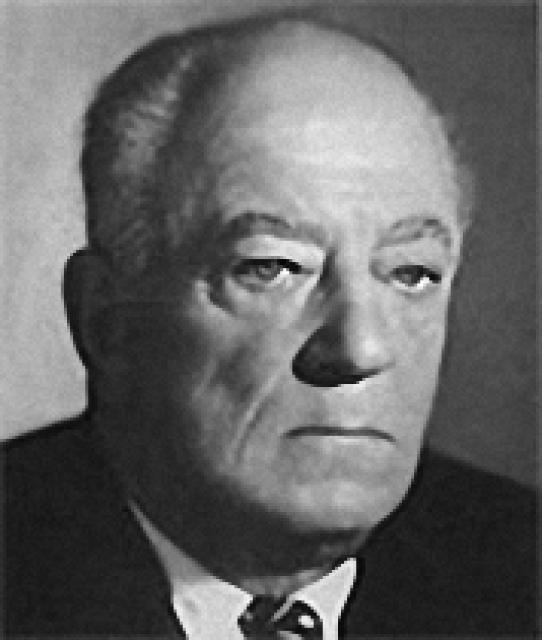
- Lev Aleksandrovich Zenkevich: A Pioneer in Marine Biology
- Foundational Experiences
- Establishment of the Floating Marine Institute
- Academic Career
- Marine Research and Contributions
- Leadership and Recognition
- Legacy
Lev Aleksandrovich Zenkevich: A Pioneer in Marine Biology
Early Life and EducationLev Aleksandrovich Zenkevich was born on June 16, 1889, in Tsaritsyn, Russia. His early education included stints at Tver Classical Gymnasium and Orenburg Classical Gymnasium, which he graduated from in 1908. He initially enrolled at the Faculty of Law at Moscow State University but was expelled in 1911 for student activism. In 1912, he completed his legal studies externally and joined the Faculty of Physics and Mathematics, pursuing natural sciences.
Foundational Experiences
Zenkevich's encounter with marine fauna in Murmansk during his field work in 1914 sparked his passion for marine biology. He graduated from Moscow State University in 1916 and remained as an assistant professor in zoology. In 1917, he participated in an expedition to Lake Baikal, further solidifying his commitment to the field.
Establishment of the Floating Marine Institute
Zenkevich played a pivotal role in the establishment of the Floating Marine Institute in 1920. He participated in several of the institution's expeditions to the Barents, White, and Kara seas, serving as expedition leader for six of them.
Academic Career
In 1930, Zenkevich became Head of the Department of General Zoology at Moscow State University, followed by Head of the Department of Invertebrate Zoology in 1931. He was appointed Professor and Doctor of Biological Sciences without defending a dissertation in 1935.
Marine Research and Contributions
Zenkevich led extensive research on the benthos (marine organisms living on the seafloor) of the Caspian and Azov seas, beginning in 1932. His findings led to the introduction of the nereid worm and the mussel Syndesmya from the Azov Sea to the Caspian Sea, providing a valuable food source for sturgeon species. He was awarded the First Prize of the Moscow Society of Naturalists for this work.
Leadership and Recognition
Zenkevich served as Chairman of the Oceanographic Commission of the Presidium of the USSR Academy of Sciences (1951-1970) and President of the All-Union Hydrobiological Society (1954-1970). He was also Chief Editor of the journal "Okeanologiya" (1960-1970).
He was elected Honorary Doctor of the University of Marseille (1960) and the English Marine Biological Association (1959). He was a member of numerous domestic and international scientific societies, including the Serbian Academy of Sciences and Arts and the Academy of Zoology in Agra, India.
Legacy
Zenkevich remained Head of the Department of Invertebrate Zoology at Moscow State University for 40 years until his death in 1970. Throughout his career, he strived to remain politically neutral despite his prominent scientific achievements. His contributions to marine biology left an enduring legacy, cementing his status as a pioneer in the field.