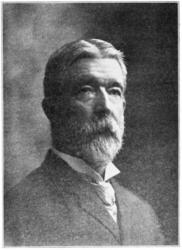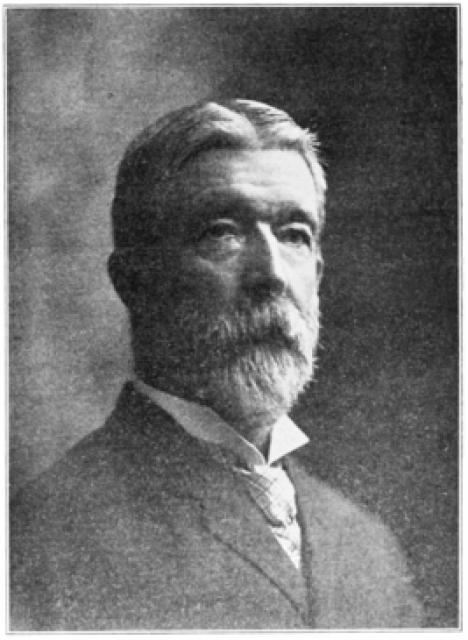
Lewis Boss
 USA
Lewis Boss was an American astronomer known for precise measurements of star positions and motions. As director of Albany’s Dudley Observatory, he led a decades-long program of meridian observations and produced a star catalog that became an important reference for astronomers.
Early life and entry into astronomy
Boss was born in Providence, Rhode Island, on October 26, 1846. He graduated from Dartmouth College in 1870, where the astronomer Charles A. Young helped nurture his interest in observational science. After college, Boss worked in government offices in Washington, D.C., first at the Census Office and later at the Land Office.
In 1872, he joined the United States Northern Boundary Commission as an assistant astronomer. The commission surveyed the border along the 49th parallel, and Boss used astronomical observations to establish the positions needed for the survey. The project also led him to a major scientific problem: reconciling star catalogs that used different standards for the positions and apparent motions of stars.
Dudley Observatory and star catalogs
Boss became director of the Dudley Observatory in Albany, New York, in 1876. He remained there for the rest of his career, building its work around accurate star-position measurements. His 1878 catalog, prepared for the Northern Boundary Commission, compared earlier catalogs and set out standardized corrections along with the positions and proper motions of 500 stars. The American Ephemeris adopted his system for many years.
Boss continued refining star data and examining how stars move through space. In 1908, he calculated the convergent point of a moving group in Taurus, helping establish the shared motion of stars associated with the Hyades. He received the Royal Astronomical Society’s Gold Medal in 1905 for his work in astronomy.
In 1910, Boss published the Preliminary General Catalogue of 6,188 Stars. The catalog brought together carefully measured positions and motions for stars across the sky and became a reference point for research into stellar motions. Boss also served as editor of The Astronomical Journal from 1909 until his death.
Later years and legacy
Boss died in Albany on October 5, 1912. His son Benjamin, also an astronomer, continued the cataloging work and later expanded the family’s star catalogs.
Boss’s work helped make precision astrometry a foundation for studying the structure and motion of the stellar system. His catalogs allowed astronomers to compare observations made at different times and observatories, turning painstaking positional measurements into data that could reveal patterns in the movement of stars.