Lincoln Hall
 Australia
Biography of Lincoln Hall
Lincoln Ross Hall was an Australian mountaineer, adventurer, author, and philanthropist. He was born in 1955 in the capital city of Australia, Canberra. Hall attended Telopea Park High School and later studied zoology at the Australian National University. It was during his youth that he developed a passion for mountaineering.

By the late 1970s, Hall had already participated in several significant expeditions, including one to the Himalayas, specifically the Himalayan peak Dunagiri. He first attempted to summit Mount Everest in 1984, where he accomplished the first ascent via the North Face. However, his second attempt on this formidable peak nearly cost him his life.
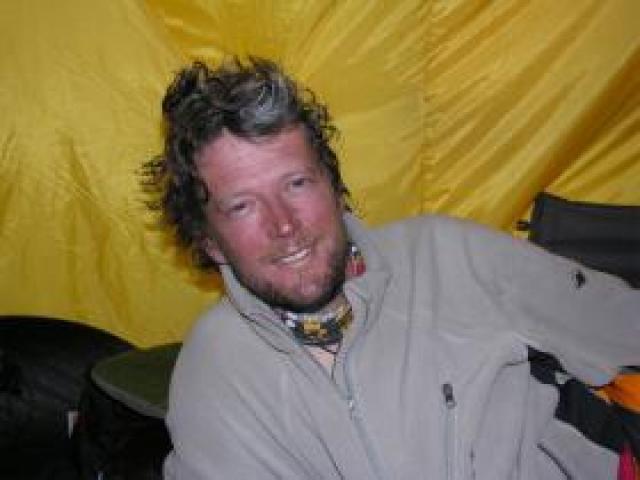
On May 25, 2006, Hall joined Alexander Abramov's group for an ascent of Mount Everest. The team consisted of Abramov, Hall, two other climbers, and five Nepalese Sherpas. As night fell, Hall, accompanied by three Sherpas, stood at the summit, becoming the only member of the group (excluding the Sherpas) to conquer the mountain. The other climbers decided to descend due to one member experiencing sudden blindness. However, as Hall began his descent, he suddenly felt ill and lost his coordination.
Efforts were made to transport him down, but the challenging conditions at such high altitude made progress slow. After a few hours, one of the Sherpas reported via radio that Hall had shown no signs of life for some time. He was declared dead, and the Sherpas received orders from the group's leader to leave Hall behind and descend to the rest of the team.
Miraculously, on the morning of May 26, 2006, a group led by Daniel Mazur, who was also attempting to summit Mount Everest, discovered Hall. Despite being declared dead, Hall was alive. They provided him with hot tea, oxygen, and relayed the news of his survival to Abramov's group. Abramov immediately sent a team of twelve Sherpas to assist in Hall's rescue.
The arduous process of bringing Hall down the mountain began. On the evening of May 26, 2006, he was delivered to the base camp, where he received medical attention. The rescue operation proved to be incredibly challenging, and the exhausted Nepalese Sherpas who saved his life were pushed to their limits. Hall's survival was deemed a miracle, considering he had already been mourned as dead.
Sadly, Hall did not live a long life after his miraculous survival. On March 20, 2012, at the age of 56, he passed away at the Royal Prince Alfred Hospital in Sydney, Australia, from a rare illness called mesothelioma, which can be caused by prolonged exposure to asbestos.
Lincoln Hall's name will forever remain in mountaineering history. His rescue story became known as "The Miracle on Everest," and it sparked debates about the death of another climber, David Sharp, emphasizing the importance of prioritizing human life over summiting mountains.