Liri Belishova
 Albania
- Liri Belishova's Early Life and Influence
- Communist Party Activism
- Rise to Power
- Proponent of Khrushchev's Reforms
- Conflict and Persecution
- Rehabilitation and Legacy
Liri Belishova's Early Life and Influence
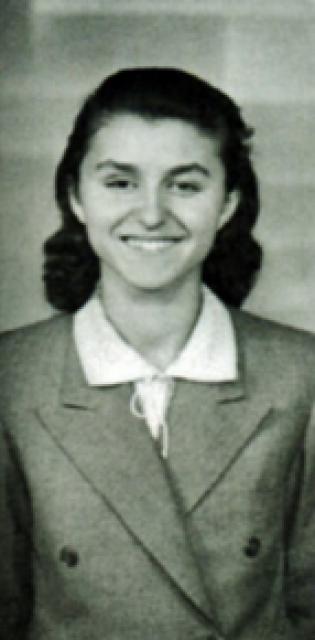
Liri Belishova, an Albanian communist and prominent political figure, was born into an affluent family with strong nationalist views. Educated at the prestigious Queen Mother's Pedagogical Institute, she was a contemporary of Neqmie Xhuglini (Hoxha) and Fiqirete Sanxhaktari (Shehu). She also pursued nursing, demonstrating her diverse interests.
Inspired by Maxim Gorky's novel, "Mother," Belishova embraced communism at a young age. She joined the youth communist organization in 1940 and later the Communist Party of Albania (CPA) in 1943. During the Nazi occupation, she fought with the National Liberation Army and was involved in an anti-Italian demonstration, which resulted in her losing an eye.
Communist Party Activism
After the war, Belishova became the leader of the youth organization, "Albanian Popular Youth." She represented Albania at international youth congresses and initially supported the Stalinist ideology. However, she opposed the party's alignment with Yugoslavia under Josip Broz Tito.
Belishova and her husband, Nako Spiru, expressed their disapproval of Tito's influence, leading to a conflict with Party leadership. In November 1947, Spiru committed suicide, while Belishova was removed from her positions and sent to Berat to work as a teacher.
Rise to Power
Following the Soviet-Yugoslav split in 1948, Belishova was rehabilitated and appointed to the Politburo of the Albanian Party of Labor (APL). She played a significant role as Secretary of the Central Committee. In 1952-1954, she studied at the Institute of Marxism-Leninism in Moscow.
Proponent of Khrushchev's Reforms
Belishova became a fervent supporter of Soviet leader Nikita Khrushchev's "Thaw" policy. She joined the pro-Soviet faction within the APL, advocating for reforms. However, this stance put her at odds with Enver Hoxha, who distanced Albania from the Soviet Union.
Conflict and Persecution
Belishova's support for Khrushchev's reforms led to accusations of anti-party activity and a conspiracy with the Soviet leader. She was removed from all her posts. In 1961, she was arrested by the Sigurimi and imprisoned for nearly three decades.
Rehabilitation and Legacy
After the fall of communism in Albania in 1990, Belishova was rehabilitated and returned to Tirana. She actively participated in the veterans' movement and condemned the authoritarian rule of Hoxha and Mehmet Shehu.
Belishova criticized the ruling party for replacing the fight for liberation with the pursuit of dictatorship. She remained a staunch advocate for the principles of the French Revolution: "Liberty, Equality, Fraternity."
Liri Belishova passed away at the age of 91, leaving behind a complex and impactful legacy as an Albanian communist and symbol of the country's political struggles.