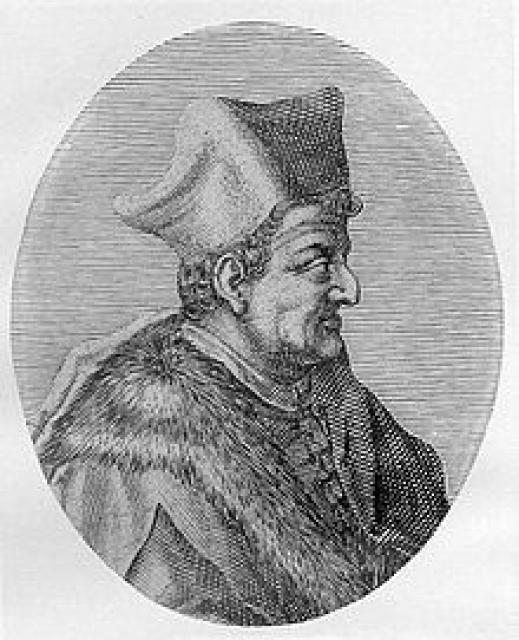
Lorenzo Valla
 Italy
- Education and early controversies
- Language as a critical method
- The Donation of Constantine
- Biblical scholarship and final years
Lorenzo Valla was one of the most daring scholars of the Italian Renaissance. A humanist, philologist and philosopher, he treated language as a tool for testing claims about history, religion and power. His most famous demonstration—that the Donation of Constantine was a medieval forgery—challenged a document used to support papal authority in temporal affairs. His work on classical Latin and the New Testament also helped shape later scholarship.
Education and early controversies
Valla was born in Rome around 1406 to a family connected with the papal administration. He learned Latin and Greek from leading humanists, including Leonardo Bruni and Giovanni Aurispa, and developed an early reputation for sharp argument. Hoping to enter the papal secretariat, he was turned down, reportedly because he was considered too young.
He began teaching rhetoric in Pavia in 1431, but his outspoken criticism of legal language angered local jurists and forced him to leave. Valla’s polemical style repeatedly brought him into conflict with established authorities, yet it also helped distinguish his approach: he insisted that ideas be examined through the actual history and usage of words.
Language as a critical method
Valla’s *Elegantiae linguae Latinae* (On the Elegance of the Latin Language), completed in the early 1440s, became a widely used guide to Latin grammar, vocabulary and style. Drawing on ancient writers such as Cicero and Quintilian, he argued that scholars should learn how classical Latin worked rather than rely on later habits that had drifted from it. The handbook circulated widely and helped make precise philological study central to Renaissance humanism.
He applied the same method to philosophy. In his *Dialectical Disputations*, he challenged scholastic-Aristotelian reasoning, arguing that technical concepts should be tested against ordinary language and common sense. His ideas were controversial, but they opened new ways for humanists to question established systems of thought.
The Donation of Constantine
In 1435, Valla entered the service of Alfonso of Aragon, whose court was based in Naples and whose political conflict with the pope gave Valla’s scholarship a sharp political edge. In 1440, he examined the Donation of Constantine, a text that claimed the fourth-century emperor had granted the pope extensive authority over Rome and the western empire.
By studying the Latin language and historical context, Valla showed that the document used words and institutions that belonged to a much later period. His analysis demonstrated that it could not have been written in Constantine’s time. This became a landmark in historical criticism: rather than accepting a document because of its authority, Valla tested it against evidence inside the text itself.
Biblical scholarship and final years
Valla also compared the Latin Vulgate New Testament with the original Greek text, making annotations that examined translation choices and textual meaning. His work later influenced Erasmus, who discovered and published Valla’s notes. It showed how the same philological tools used to study classical authors could be applied to scripture.
Valla’s challenges brought him under suspicion at the Neapolitan court, where opponents accused his writings of heretical ideas. King Alfonso intervened on his behalf. In 1447, Valla returned to Rome and entered the papal service, first as an apostolic scribe and later as a papal secretary. He continued his scholarship until his death in 1457.
Valla’s legacy lies in the critical habits he helped establish: close attention to language, historical context and evidence. His work did not make him universally admired; his tone and arguments earned him many enemies. But by showing that texts could be tested rather than simply revered, he became a defining figure in Renaissance scholarship and an important influence on the development of modern historical and textual criticism.


