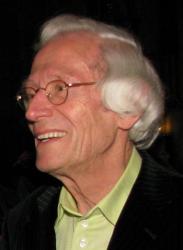
Lothar Kempter
 Switzerland
- Wolfgang Rihm: A Multifaceted Musical Master
- Early Life and Education
- Musical Career
- Teaching and Compositions
- Musical Contributions
- Legacy and Impact
Wolfgang Rihm: A Multifaceted Musical Master
Wolfgang Rihm, a German-Swiss composer, conductor, and music educator, left an indelible mark on the musical world.
Early Life and Education
Born to a family in Germany, Rihm initially pursued a degree in law at the University of Munich. However, upon his father's passing in 1868, he transitioned to the Munich Conservatory, where he studied under renowned musicians such as Josef Rheinberger, Hans von Bülow, Franz Wüllner, and Karl Bermann.
Musical Career
In 1871, Rihm became the second conductor of the Magdeburg City Orchestra. From 1872 to 1875, he worked in Strasbourg, and in 1875, he settled in Zurich, Switzerland. There, he directed the Zurich Opera, where he staged several of Wagner's operas.
Teaching and Compositions
From 1886 to 1915, Rihm held a teaching position at the Zurich Conservatory, imparting his knowledge of music theory and composition. His legacy extends to the operas he composed: "Die Flagellantin" (1870), "Dornröschen" (1893), and "Die Sansculottes" (1900).
Musical Contributions
Beyond his operas, Rihm also enriched the musical repertoire with works inspired by literary masterpieces. He composed incidental music for Friedrich Schiller's "Wilhelm Tell," Goethe's "Faust," and Shakespeare's "Timon of Athens." Additionally, he wrote pieces for choir and wind orchestra.
Legacy and Impact
Wolfgang Rihm's diverse contributions to music left a lasting impact on the field. As a composer, conductor, and educator, he played a pivotal role in shaping the musical landscape of the late 19th and early 20th centuries, leaving behind a legacy that continues to inspire musicians and audiences alike.