Louis Blanqui
 France
Biography of Louis Blanqui
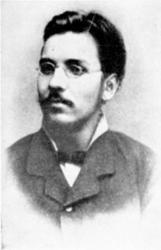
Louis Blanqui, a French revolutionary and utopian communist, was born on February 1, 1805, in the alpine village of Puget-Théniers. He studied in the atmosphere of dissent and conspiracies that characterized the Parisian student movement during the Bourbon Restoration from 1815 to 1830.
Blanqui joined the secret revolutionary society of the Carbonari and was wounded during a revolt against the government of Charles X in 1827. He participated in the overthrow of the monarchy during the July Revolution of 1830. However, disillusioned by the betrayal of the revolution by the new king, Louis-Philippe, Blanqui aligned himself with the most radical opposition to the July Monarchy.
Blanqui was a member of secret societies that were exposed by the police in 1836 and 1839. In May 1839, after a failed uprising, he was imprisoned. The February 1848 revolution, according to both friends and enemies of Blanqui, opened new opportunities for him to apply his talents. Inadvertently accompanying the crowd that dispersed the Constituent Assembly on May 15, he was arrested and remained in prison until granted amnesty in 1859 by Napoleon III.
After his release, Blanqui immediately became involved in a new revolutionary cycle: conspiracies, imprisonment, escape, and exile. From Belgium, he led a secret organization of workers and students in Paris. The "Government of National Defense," composed of representatives of the middle classes, replaced Napoleon III's regime. Blanqui supported it until he came to the conviction that the new government was weak and indecisive in its war against Prussia.
On March 17, 1871, he was arrested by order of the new National Executive Authority led by Adolphe Thiers, a day before the armed conflict in Paris began. Blanquists played an important role in the history of the Paris Commune, but they lacked a leader. Thiers refused to exchange Blanqui for hostages taken by the communards, considering him the most irreconcilable opponent of the army corps. The Third Republic, emerging from the ruins of the Second Empire and the Commune, held Blanqui in prison until 1879 when he managed to become a member of the Chamber of Deputies through a political campaign.
After his release from prison, he returned to the political scene. Blanqui died in Paris on January 1, 1881. His followers created a faction in the International Workingmen's Association and a separate faction in the Socialist Party. After the split over the question of "boulangerism" (a movement advocating the transfer of power to popular French General Georges Boulanger), the remnants of the Blanquists eventually became part of the French Socialist Party.
Despite all his defeats, Blanqui influenced several generations of French radicals. It is believed that through the Russian revolutionary P.N. Tkachev, he influenced the formation of V.I. Lenin's views. The term "Blanquism" is still used in Europe to describe coupist or adventurous political ideas.