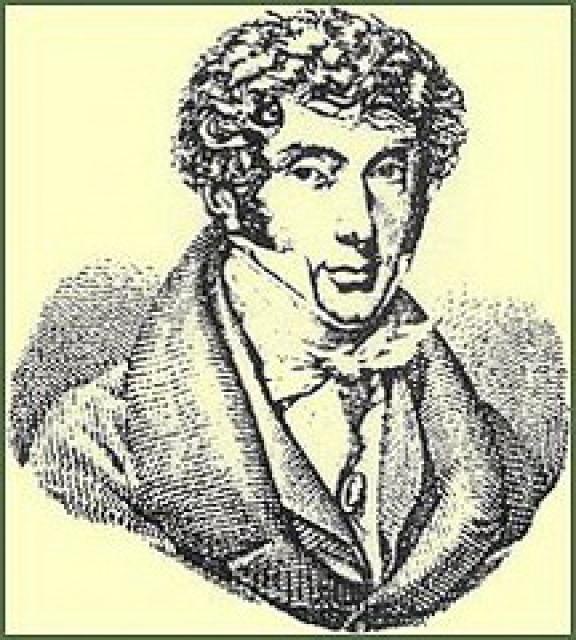
Louis Drouet
 France
- Early Life and Childhood Prodigy
- Royal Patronage and Acclaim
- European Triumphs
- Courtly Positions and Enduring Legacy
- Compositions and Pedagogical Contributions
Early Life and Childhood Prodigy
Louis Drouetwas born in Amsterdam as the son of a French immigrant barber. From one of his father's clients, he was gifted his first flute and began to teach himself the instrument. At the tender age of 7, he debuted with a concert in Paris and embarked on several concert tours throughout the years.
Royal Patronage and Acclaim
By the age of 16, Drouet had become the flute tutor to Dutch King Louis I. His reputation spread far and wide, culminating in an invitation to Paris in 1811. There, he was showered with gifts and honors. In 1817, he traveled to England, where he briefly operated his own flute-making workshop before it met an unfortunate fate.
European Triumphs
Drouet's concert tours across Europe garnered immense acclaim. Accompanied by his friend, Felix Mendelssohn, he returned to England in 1829. He counted Ludwig van Beethoven among his personal acquaintances. In 1833, he relocated to Paris.
Courtly Positions and Enduring Legacy
From 1840 to 1855, Drouet served as a Kapellmeister at the court of Duke Ernest II of Saxe-Coburg and Gotha. In 1854, he undertook a voyage to America. Beyond his performances, Drouet left behind a lasting musical legacy. Known as the "Paganini of the Flute," he mastered the double staccato technique. His rivalry with flutist virtuoso Jean-Louis Tulou added further to his fame. Among his notable pupils was Wilhelm Popp.
Compositions and Pedagogical Contributions
Drouet played on simple system flutes with eight keys. His prolific compositions include countless works for flute, such as concertos, duets, trios, concert solos, fantasies, and over 300 etudes. He also authored a renowned flute method, "Méthode Pour la Flûte" (1827), serving as a foundational text for generations of flutists.


