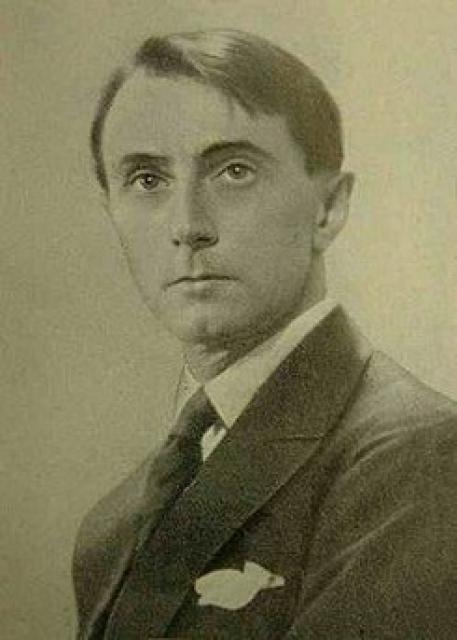
Louis Durey
 France
- Early Life and Musical Influences
- The "Sati Period"
- The "Groupe des Six"
- Political Engagements
- Later Career
Early Life and Musical Influences
Louis Durey was born in Paris on May 27, 1888, to a working-class family. Despite not attending the Paris Conservatory, Durey's musical journey began in earnest at age 19 after seeing Debussy's opera "Pelléas et Mélisande." He subsequently enrolled at the Schola Cantorum as a non-degree student, where he studied under Leon Saint-Requier.
The "Sati Period"
Durey encountered the enigmatic composer Erik Satie in 1911. Profoundly influenced by Satie's unconventional style, Durey adopted a minimalist and linear approach to composition. This "Sati period" marked the beginning of Durey's most prolific creative phase, starting with his "Carillons" for piano four-hands (1917).
The "Groupe des Six"
The premiere of Satie's "Parade" in 1917 sparked a musical revolt among young French composers. Durey, along with Honegger, Auric, Tailleferre, and Poulenc, became members of the "Concerts des Nouveaux Jeunes" and the "Vieille Colombe" theater, where they performed their radical compositions. With the addition of Darius Milhaud (absent due to military service), the group became known as the "Groupe des Six."
Political Engagements
In the 1930s and 1950s, Durey emerged as a prominent figure in the French Communist Party (FCP). He served as President of the People's Music Federation of France and Secretary of the "France-USSR" society.
Later Career
Although self-taught as a composer and conductor, Durey's contributions to French music were significant. He influenced the younger generation of composers and left a legacy of works that reflect the musical and ideological shifts of his time.




