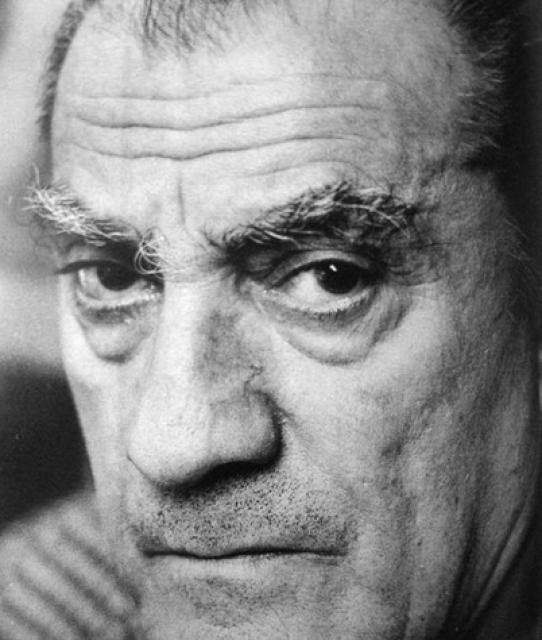
Luchino di Modrone Visconti
 Italy
Italy- Early Life and Career
- Cinematic Beginnings
- Neorealism and the Resistance
- Theatrical Triumphs
- The Power of Music in Cinema
- Literary Influences and Epic Scope
- Late Masterpieces and Legacy
Early Life and Career
Luchino Visconti,the renowned Italian film and theatre director, was born into aristocracy in Milan, Italy. His family lineage traced back to the noble Visconti family of Lombardy, known for its prominence in Italian politics and culture. Visconti's early passion for the arts led him to pursue a career in film, beginning as an assistant director to Jean Renoir on the 1936 film "Partie de Campagne" in France.
Cinematic Beginnings
Returning to Italy in the 1940s, Visconti became an active member of the anti-fascist film movement. He penned film reviews in support of democratic principles and collaborated on the 1940 film "Tosca," which he co-directed with Renoir. In 1942, Visconti directed his first independent feature film, "Obsession," an adaptation of James M. Cain's novel "The Postman Always Rings Twice." This film is considered a precursor to the Italian neorealist movement.
Neorealism and the Resistance
During World War II, Visconti joined the Italian Resistance movement and was imprisoned by the Gestapo. He narrowly escaped execution after the Allies liberated Italy. His experiences during the war had a profound influence on his artistic development, reinforcing his commitment to social justice and humanitarian themes.
Theatrical Triumphs
In addition to his film work, Visconti also enjoyed a successful career as a theatre director. From 1945 onwards, he staged renowned productions of plays by Arthur Miller, Anton Chekhov, William Shakespeare, and other playwrights. His theatrical endeavors were marked by his innovative use of lighting, set design, and music.
The Power of Music in Cinema
Visconti's use of music in his films was a defining characteristic of his work. He believed that music could transcend language barriers and convey deep emotions and meanings. He incorporated excerpts from classical works by Verdi, Bruckner, Mahler, and others into his films, using them to create a rich and evocative cinematic experience.
Literary Influences and Epic Scope
Visconti's films were often based on literary works, particularly classic novels of the 19th and 20th centuries. He sought to capture the essence of these works while adapting them for the screen. His films were characterized by their epic scope and sweeping historical narratives that explored themes of class, family, and the human condition.
Late Masterpieces and Legacy
In his later years, Visconti's films continued to explore complex psychological and social issues. "Death in Venice" (1971) featured a haunting depiction of a composer's obsession with a young boy, while "The Damned" (1969) exposed the horrors of Nazi Germany. Visconti's final film, "The Innocent" (1976), posthumously released, was a powerful condemnation of moral decay and the pursuit of personal gain.
Luchino Visconti's legacy as a visionary artist who bridged the worlds of theatre and cinema is undeniable. His innovative techniques, commitment to social commentary, and masterful use of music and literature have left an enduring mark on the art form.