Lucia Joyce
 Italy
Italy- Biography of Lucia Joyce
- Early Life and Family
- Professional Ballet Career
- Relationship with Samuel Beckett
- Struggles with Schizophrenia
- Influence on James Joyce's Work
- Legacy
Biography of Lucia Joyce
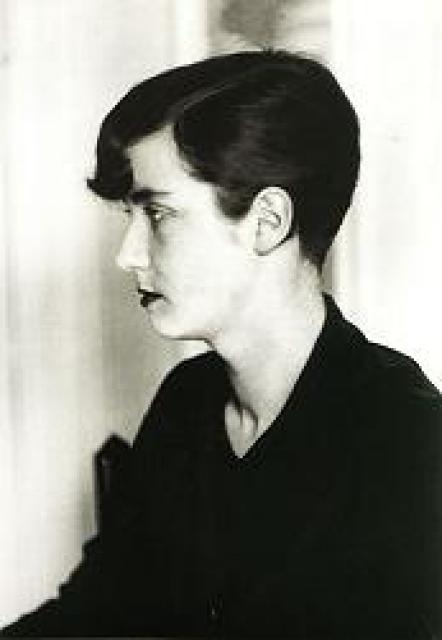
Lucia Joyce, born Lucia Anna Joyce on July 26, 1907 in Trieste, Italy, was an Italian-Irish dancer and the daughter of Irish writer James Joyce. Her life, according to researchers, became a vivid embodiment of her father's incredible and insane creativity. Talented and beautiful, Lucia had a successful career in ballet, but in her youth, signs of schizophrenia were noticed, making her unable to live in society as she grew older.

Early Life and Family
Lucia Joyce was the daughter of James Joyce and Nora Barnacle, James' steadfast companion. From an early age, Lucia's life was filled with excitement and fascination. Her native language was Italian, and she corresponded with her father in Italian as well. James did not particularly insist on Lucia learning English.

Professional Ballet Career
From childhood, Lucia had a passion for ballet and began pursuing it professionally as a teenager. She quickly caught the attention of the most famous European ballet legends. Her teacher was Isadora Duncan, who was considered the greatest European ballerina at the time and one of the most desired women.
Relationship with Samuel Beckett
Around 1930, Lucia entered into a romantic relationship with the young Samuel Beckett. Interestingly, Beckett would later be referred to as the last modernist, while James Joyce became the most prominent writer at the beginning of the modernist movement. Unfortunately, their romance was interrupted as Lucia began to exhibit signs of schizophrenia by the early 1930s.
Struggles with Schizophrenia
Thanks to her father's influence and fame, Lucia received the attention of the best specialists, and in 1934, she became a patient of Carl Jung. However, her condition was never fully resolved, and Lucia never recovered. She lived in Zurich for a while before moving to France. In 1951, after her father's death, she was transferred to St Andrew's Hospital in Northampton, England, where she remained until her death in 1982 at the age of 75.
Influence on James Joyce's Work
James Joyce was close to his daughter and worried about her recovery. Many researchers of his work believe that Lucia's illness inspired the creation of "Finnegans Wake," Joyce's most complex work. The novel tells the story of a family but completely mixes chronotopes, characters, events, and blends reality with dreams. Critics had mixed reactions to the work and called it "untranslatable." However, over time, translators perceived it as a challenge. Today, translations of the novel can be found in popular European languages, but researchers believe that each translation only captures 50% of Joyce's original work, with the rest being the interpretation of the translator.
Legacy
Lucia's life is often referred to as an expression of her father's creativity: strange, misunderstood, with a flicker of madness in her eyes. In 2004, her life story was depicted in the play "Calico" by Michael Hastings and the graphic novel "Dotter of Her Father's Eyes."