Lucifer
- Lucifer: Fallen Angel and Symbol of Evil
- Medieval Interpretation
- Later Christian Views
- Identification with the Devil
- Modern Interpretations
- Cultural Depictions
- Luciferianism: A Branch of Satanism
- Modern Luciferianism
- Other Religions
Lucifer: Fallen Angel and Symbol of Evil
Biblical OriginsLucifer is a biblical character mentioned as a fallen angel in Isaiah 14:12-18. The Hebrew term translated as "Lucifer" is "helel ben-shachar," meaning "morning star" or "daystar." However, scholars believe the passage refers to a Babylonian king rather than a fallen angel.
Medieval Interpretation
In the 2nd century Enoch Apocalypse, Lucifer is identified with the archangel Satanael, who rebelled against God. He was cast out of heaven with his followers, who became known as demons. In the 11th century, scholars began to associate the story of Lucifer's fall with the angel who tempted Eve in the Garden of Eden.
Later Christian Views
Christian authors in the Middle Ages and Renaissance continued to view Lucifer as a fallen angel and the personification of evil. The Book of Revelation (12:7-9) describes a battle between the archangel Michael and "the great dragon, that old serpent, called the Devil, and Satan."
Identification with the Devil
The term "Lucifer" was first used in connection with the Devil by Jerome in the 4th century. In the Latin Vulgate Bible, the phrase "Lucifer, qui mane oriebaris" (Lucifer, who rose in the morning) is used in Isaiah 14:12. However, the Vulgate does not capitalize the word Lucifer.
Modern Interpretations
Some theologians argue that the story of Lucifer's fall is a metaphor for the sin of pride. Others believe it is a literal account of a demonic rebellion. Modern scholars, however, often view the Lucifer myth as a combination of ancient Babylonian and Jewish legends.
Cultural Depictions
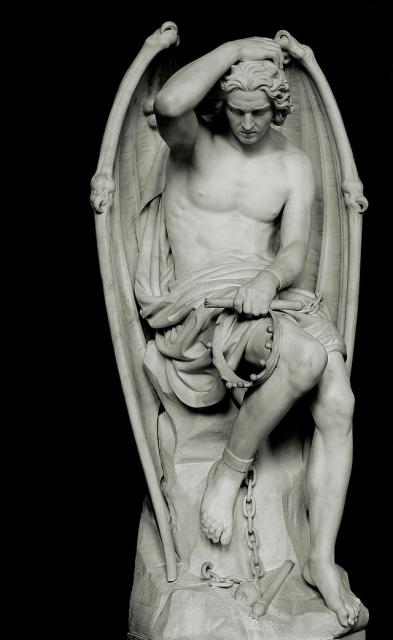
Lucifer has been depicted in art, literature, and music throughout history. He is often portrayed as a handsome, but fallen angel with wings. Notable depictions include Milton's "Paradise Lost," Goethe's "Faust," and the television series "Lucifer."
Luciferianism: A Branch of Satanism
Luciferianism emerged in the Middle Ages as a reaction against the Catholic Church. Luciferians claimed to possess special knowledge about Lucifer and his history. The movement attracted intellectuals who were disillusioned with the official church.
Modern Luciferianism
In the 20th century, Luciferianism became associated with Anton Szandor LaVey's Church of Satan. LaVey's "Satanic Bible" identifies Lucifer as one of the four Crown Princes of Hell and the ruler of the East.
Other Religions
In Islam, Iblis is the fallen angel who refused to bow down to Adam. He is not associated with the concept of Lucifer, but he also represents the embodiment of evil. In Freemasonry, the term "Lucifer" has been used symbolically to represent enlightenment and the pursuit of knowledge.


