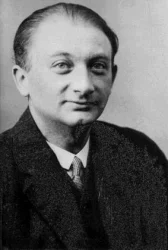
Ludwig Beck
Ludwig Beck was a senior German army officer who resigned rather than support Adolf Hitler’s plans for war against Czechoslovakia, then became a central figure in the military resistance to the Nazi regime. His role in the failed July 20, 1944 plot was a dramatic end to a career that had once placed him at the center of Germany’s rearmament.
Early life and military career
Beck was born on June 29, 1880, in Biebrich, near Wiesbaden, in the Kingdom of Prussia. He joined the Prussian army as a cadet in 1898 and served as an artillery officer. During the First World War he worked in staff roles, gaining a reputation as a careful planner and military theorist.
After Germany’s defeat, Beck remained in the reduced Reichswehr. He helped revise army doctrine and wrote *Truppenführung*, a manual on troop leadership that influenced German military training. In 1933 he became head of the Truppenamt, the army office that operated as a general staff despite the restrictions imposed after the war. In 1935, when the German army openly restored the General Staff, Beck became its chief.
Conflict with Hitler’s plans
Beck initially supported rearmament and the revision of the postwar settlement. His opposition to Hitler developed chiefly around the timing and consequences of the regime’s aggressive foreign policy. He believed the army was not prepared for a major war and warned that an attack on Czechoslovakia could bring Germany into conflict with Britain and France.
Throughout 1937 and 1938, Beck sent memoranda and argued within military leadership against Hitler’s plans. He urged senior commanders to resist the move toward war, but they did not act together. In August 1938, he resigned as chief of the General Staff. His departure was a public break with Hitler’s strategy, though it did not mean he had always opposed the regime or its earlier policies.
A leading figure in the resistance
After leaving active command, Beck became an important link between military officers and civilian opponents of Hitler, including the former mayor of Leipzig, Carl Friedrich Goerdeler. The group discussed plans for a coup that would remove Hitler and establish a new government. Beck was intended to serve as head of state in a post-Nazi administration.
The conspirators’ earlier plans did not succeed, and the war expanded across Europe. By 1944, resistance figures had formed a new plan around Claus von Stauffenberg and the army’s reserve-command system, known as Operation Valkyrie. Stauffenberg planted a bomb at Hitler’s headquarters on July 20, 1944. Hitler survived, and the attempted coup quickly collapsed.
Beck was at the conspirators’ headquarters in Berlin, the Bendlerblock, as events unfolded. After the failure became clear, he tried to take his own life. He survived his initial attempts and was then shot by order of the army officers who had regained control of the building. He died on July 20, 1944.
Legacy
Beck’s career is often remembered through the contrast between his early service in a rearming Germany and his later resistance to Hitler’s plans for conquest. His break with the regime began with military and strategic objections, but he ultimately joined a conspiracy aimed at ending Nazi rule.
His opposition reflected the limits and possibilities of resistance within the German officer corps. Beck had once held one of the army’s highest offices, yet he could not persuade its leadership to confront Hitler before war began. In the final years of his life, he helped prepare a civilian-military alternative to dictatorship, and paid for that choice after the July 20 plot failed.