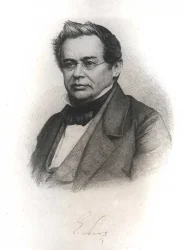
John Desmond Bernal
John Desmond Bernal was an Irish-born scientist whose research helped establish X-ray crystallography as a tool for revealing the architecture of matter. He applied it to crystals, metals, water, and biological molecules, helping lay foundations for structural biology. A committed political activist as well as a laboratory innovator, he also argued that science should be planned and used to meet society’s needs.
Early life and education
Bernal was born on May 10, 1901, in Nenagh, County Tipperary, Ireland. He attended school in Ireland and England before entering Emmanuel College, Cambridge, in 1919. There he studied mathematics and science and became fascinated by the emerging use of X-rays to uncover the arrangement of atoms inside crystals.
After graduating, he worked with physicist William Henry Bragg at the Royal Institution in London. Bragg’s group was at the forefront of X-ray crystallography, a method that infers the structure of a material from the patterns formed when X-rays pass through it. Bernal developed new ways to record and interpret those patterns, work that helped make the technique more precise and practical.
Pioneering crystallography
Bernal returned to Cambridge in 1927 as the university’s first lecturer in structural crystallography. His early research examined minerals and metals, including graphite and bronze. He became known for combining theoretical insight with ingenious experimental equipment, building instruments and analytical methods that other researchers could use.
His interests soon turned to biological materials. In 1934, working with Dorothy Crowfoot Hodgkin, Bernal obtained a clear X-ray diffraction photograph of a protein crystal, pepsin. The result showed that delicate biological molecules could be studied using crystallography, opening a route toward determining the structures of proteins and other complex substances.
Bernal encouraged and supervised a generation of researchers whose work transformed molecular biology. Among those associated with his research groups were Max Perutz, John Kendrew, Aaron Klug, and Rosalind Franklin. Their scientific paths and findings were their own, but the laboratory culture and research direction he helped create gave structural studies of biological molecules a major institutional home.
He also investigated liquid water, whose structure cannot be understood as a simple repeating crystal lattice. His work with Ralph Fowler helped shape later scientific models of water and liquids. Bernal’s broad curiosity led him to study cement, viruses, and the conditions that might have made the emergence of life possible.
Science and society
Bernal believed that science was a collective enterprise with profound social consequences. In *The Social Function of Science* (1939), he argued that research should be coordinated and directed toward public welfare rather than left entirely to commercial interests or individual priorities. The book became an influential early contribution to science policy and the study of science in society.
He joined the Communist Party of Great Britain in the 1920s and remained a prominent Marxist intellectual. His politics shaped his views on scientific planning and international cooperation, and brought him recognition in the Soviet Union and other socialist countries. They also made his public life controversial, especially as political tensions hardened during the Cold War.
During the Second World War, Bernal served as a scientific adviser and helped apply research to military planning. He contributed to studies of invasion conditions and the planning of the Allied landings in Normandy. His wartime work demonstrated the power of scientific analysis in government, while raising questions about the responsibilities of scientists when their expertise is used for war.
Later years and honors
Bernal spent much of his later career at Birkbeck College, University of London. He built a major center for crystallographic and biomolecular research there, bringing together scientists from physics, chemistry, biology, and engineering. In 1963 he became the United Kingdom’s first professor of crystallography.
He was elected a Fellow of the Royal Society in 1937 and received its Royal Medal in 1945. He also received the Lenin Peace Prize in 1953. A series of strokes affected his health in his later years, but he remained a towering figure in scientific life until his death in London on September 15, 1971.
Legacy
Bernal’s legacy spans both scientific discovery and the organization of research. He helped show that X-ray methods could reveal the structures of biological molecules, and his laboratory influenced researchers who went on to make some of the twentieth century’s most important discoveries in structural biology.
His writing on science policy also remains relevant. Bernal insisted that scientific knowledge carries obligations beyond the laboratory, a conviction that made him both influential and contentious. The combination of experimental ingenuity, wide-ranging curiosity, and political engagement made him one of the most distinctive scientists of his generation.