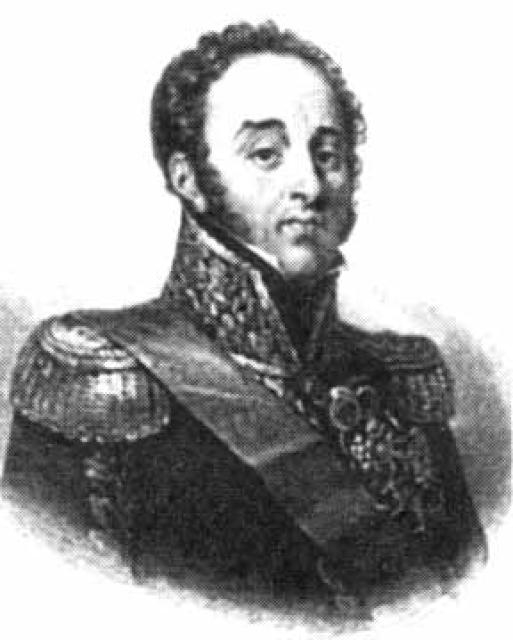
Lui Siushe
 France
- Early Life and Military Beginnings
- Revolutionary Wars
- Napoleonic Wars
- Campaigns in Spain
- Siege of Valencia
- Later Career and Legacy
Early Life and Military Beginnings
Louis Gabriel Suchet, born in Lyon in 1770 to a wealthy silk merchant, received his education at the prestigious Collège de l'Oratoire de l'Île Barbe. Upon graduation, he joined the National Guard in 1791.
Revolutionary Wars
Suchet's military career began in May 1792 as a soldier in the Ardèche Volunteer Company. By September 1793, he had risen to the rank of Lieutenant Colonel in the 4th Volunteer Battalion of the Ardèche Department. He fought against royalists in Lyon and Toulon, earning recognition for his bravery.
Napoleonic Wars
In 1797, Suchet assumed command of the 18th Line Demi-Brigade. His military prowess shone in campaigns in Italy under Napoleon Bonaparte, including the battles of Dego, Lodi, Castiglione, Arcole, and Rivoli. Appointed Chief of Staff of the Italian Army in 1798, he later commanded a group of 12,000 men on the left flank of General Masséna's forces.
Campaigns in Spain
In 1808, Suchet was sent to Spain as commander of a division in the 5th Army Corps. He distinguished himself in the Battle of Jena (1806), and later fought at Austerlitz and Pułtusk. In 1809, he took command of the 3rd Army Corps, which was later expanded into the Army of Aragon. Suchet's military genius led to victories over Spanish forces, including the capture of Zaragoza and the surrender of key garrisons such as Lérida, Mequinenza, Tortosa, and Tarragona.
Siege of Valencia
Suchet's greatest triumph came with the siege of Valencia in 1811. After a grueling two-month siege, the garrison surrendered, resulting in the capture of 19,000 Spanish soldiers and 23 generals. The ceremony of surrender took place in the Albufera lagoon.
Later Career and Legacy
Suchet's military brilliance extended to counter-guerrilla operations, bringing stability to the regions of Aragon, Catalonia, and Valencia. He became Governor of Catalonia in 1813 and Colonel General of Cavalry of the Imperial Guard. Despite his success, Suchet struggled against Spanish partisan forces and was eventually assigned to command the secondary 7th Military District (Alpine Army) during Napoleon's First Restoration. He was later stripped of his rank and command during the Second Restoration but was reinstated as a peer in 1819. Napoleon himself regarded Suchet as "the most capable French general." Suchet was buried in the Père Lachaise Cemetery in Paris, and a boulevard in Zaragoza bears his name.