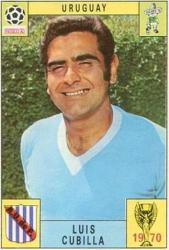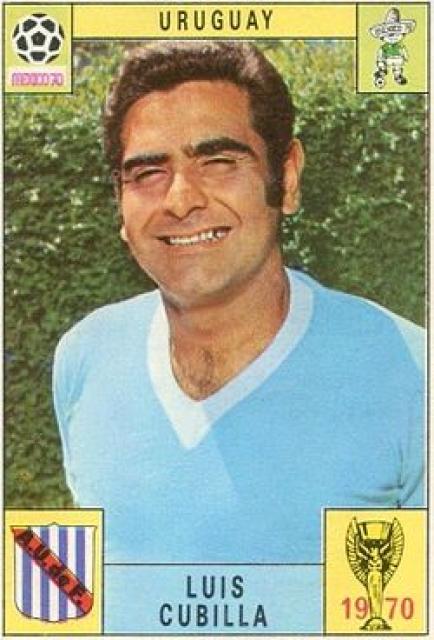
Luis Cubilla
 Uruguay
- A Boy from Paysandú
- The Peñarol Years and a European Detour
- Three World Cups with Uruguay
- Olimpia and a Coaching Legacy
- Final Years and Remembrance
Luis Cubilla’s career stretched from the muddy neighborhood pitches of Paysandú to the biggest stages in South American football. As a quick, inventive forward, he played in three World Cups and won major continental titles with both Peñarol and Nacional. As a coach, he became synonymous with Paraguay’s Olimpia, guiding the club to two Copa Libertadores crowns and helping turn its ambitions into an era of international success.
A Boy from Paysandú
Cubilla was born in Paysandú, Uruguay, on March 28, 1940. Football was close at hand: his family lived near the city’s main league ground, and he later recalled wandering off at just three years old to watch a match, prompting police to return him home. At 11, he made his first appearance for Colón, a neighborhood team formed by local boys who spent their days kicking a ball around.
His flair was evident early. Cubilla remembered being called up for a Paysandú representative side at 14, only to fall out with the coach after a training-ground confrontation. It was a small-town setback, but his route to the national game soon opened. In 1957, after a trial with Montevideo Wanderers failed to produce a deal, Peñarol came calling. The teenager left home for one of Uruguay’s most powerful clubs.
The Peñarol Years and a European Detour
At Peñarol, Cubilla developed into a sharp right-sided attacker, dangerous when he could carry the ball at pace and turn a defender. He was part of a side that dominated domestically and made its mark across South America. Peñarol won the Copa Libertadores in 1960 and 1961, then captured the Intercontinental Cup in 1961, establishing itself among the era’s elite teams.
In 1962, he moved to Barcelona, joining one of Europe’s most famous clubs. The spell did not unfold as he had hoped. Looking back, he said he had been unprepared for the scale of the change after growing up in poverty and that he lacked the personal experience to settle into a different world. He did collect a Copa del Rey medal, but by 1964 he was in Argentina with River Plate, where he played for four seasons.
He returned to Uruguay in 1969, this time joining Nacional. The switch placed him on the other side of the country’s defining club rivalry, and he helped Nacional match Peñarol’s stature with another historic run. In 1971, Nacional won both the Copa Libertadores and the Intercontinental Cup. Cubilla later also played for Chile’s Santiago Morning and finished his playing career at Defensor Sporting in 1976, part of a team that delivered a breakthrough Uruguayan league title.
Three World Cups with Uruguay
Cubilla represented Uruguay at the 1962, 1970 and 1974 World Cups. He played 38 senior internationals and scored 11 goals, according to the Uruguayan Football Association. The 1970 tournament in Mexico was the high-water mark for the national side during his international career: Uruguay reached the semifinal before losing 3–1 to Brazil.
One of the campaign’s defining moments came in the quarterfinal against the Soviet Union. In extra time, Cubilla chased a ball that the defenders appeared to believe was going out of play, kept it alive and sent it across for Víctor Espárrago to score the winning goal. The scrappy, determined play became emblematic of his style: alert, restless and unwilling to concede a ball until the play was truly over.
The 1974 tournament was more difficult for Uruguay, who exited in the group stage. Cubilla’s international career had run for nearly 15 years, encompassing both the optimism of Mexico and the frustration of a team struggling to keep pace with changing football.
Olimpia and a Coaching Legacy
After retiring as a player, Cubilla moved to the touchline and built a coaching career that took him across South America and beyond. His defining relationship was with Olimpia of Asunción, where he had several spells. In 1979, he led the Paraguayan club to its first Copa Libertadores title, defeating Boca Juniors in the final. Olimpia then won the Intercontinental Cup, becoming the first Paraguayan team to claim that world title. His side’s Libertadores triumph also broke the long run of champions from Argentina, Brazil and Uruguay.
He returned to the summit in 1990, winning a second Libertadores with Olimpia and adding further international honors, including the Supercopa Sudamericana and Recopa Sudamericana. Across multiple spells, he also collected Paraguayan league championships. His success made him one of the club’s most celebrated managers and gave Olimpia a lasting place in the continent’s football story.
Cubilla coached several other major sides, including Peñarol, Nacional, River Plate, Newell’s Old Boys and Atlético Nacional. He also returned to the Uruguay national team as head coach, taking charge from 1991 to 1993. His willingness to move between countries and rival clubs kept him immersed in the game long after his playing days ended.
Final Years and Remembrance
Cubilla died in Asunción on March 3, 2013, aged 72, after a battle with stomach cancer. His legacy crosses the Uruguay–Paraguay border: in his homeland he is remembered as an international forward who helped two great rivals win continental and world titles; in Paraguay, he remains the coach who took Olimpia to the top of South America and onto the world stage. Few careers so clearly link playing and coaching triumphs, or leave such a strong mark on both sides of the touchline.