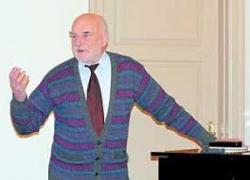
Luis Salliven
 USA
USA- Biography of Louis Henry Sullivan
- Education and Early Career
- Collaboration with Dankmar Adler
- Notable Works
- Writing and Lectures
Biography of Louis Henry Sullivan
Louis Henry Sullivan was an American architect known for his innovative skyscrapers and contributions to modern architecture. He was born on September 3, 1856, in Boston, Massachusetts.
Education and Early Career
Sullivan studied at the Massachusetts Institute of Technology and later attended the École des Beaux-Arts in Paris to further his education in fine arts. In 1880, he began his architectural career in Chicago, where he practiced for several years.
Collaboration with Dankmar Adler
From 1881 to 1900, Sullivan worked in partnership with Dankmar Adler, a prominent architect of the time. Together, they pioneered modern architecture and became one of the first builders of skyscrapers. Sullivan explored the principles of acoustics and structural design, but his primary interest lay in working with abstract forms.
Notable Works
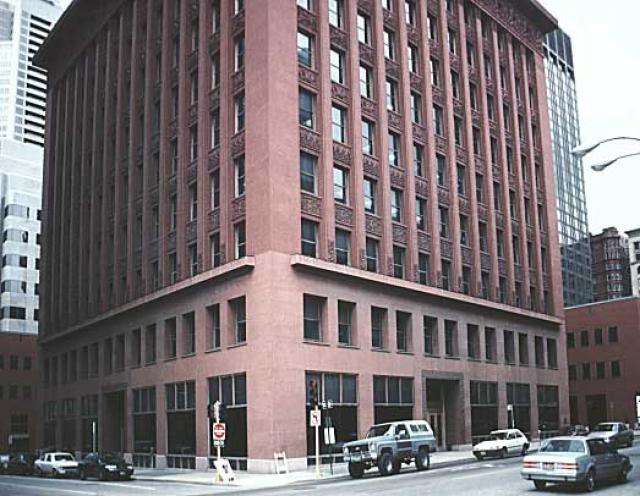
Sullivan's buildings were characterized by their structural integrity and functionality. One of his most famous works, the Wainwright Building in St. Louis (1890), was constructed with glass and terracotta panels on a steel frame. This building served as a model for future high-rise structures throughout the United States.
Other notable structures designed by Sullivan include the Auditorium Building in Chicago (1889, now Roosevelt University), the Pueblo Opera House in Colorado (1890), the Wainwright Mausoleum in St. Louis (1892), the Transportation Pavilion at the World's Columbian Exposition in Chicago (1893), the Chicago Stock Exchange building (1894), the Prudential Building in Buffalo (1894), the Bayard Building in New York (1898), the Henry Babson Residence in Riverside, Illinois (1907), and the National Farmers' Bank in Owatonna, Minnesota (1908).
Writing and Lectures
In addition to his architectural work, Sullivan was an avid writer and lecturer. From 1886 to 1923, he frequently gave lectures and wrote extensively on art, education, and democracy. His most famous written works include his autobiography, "Autobiography of an Idea" (1924), and the essay "What is Architecture?"
Louis Henry Sullivan's innovative approach to architecture and his contributions to the development of skyscrapers shaped the landscape of American cities. He passed away on April 14, 1924, leaving behind a lasting legacy in the field of modern architecture.