Lydia Cabrera
 Cuba
- A young writer in Havana and Paris
- Listening across generations
- Life in exile
- A lasting cultural record
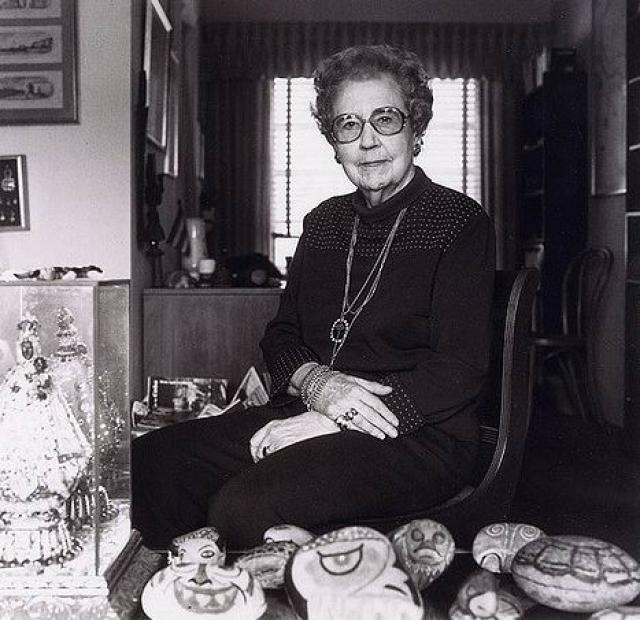
Lydia Cabrera devoted her writing to stories, rituals and religious traditions that were central to Afro-Cuban life but often overlooked in elite accounts of Cuban culture. She first approached that world as a young writer and painter; she later became one of the most influential recorders of Afro-Cuban folklore and religion. Her books combined careful listening with a distinctive literary voice, preserving knowledge that had been passed down orally across generations.
A young writer in Havana and Paris
Cabrera was born in Havana on May 20. Her birth year is listed as either 1899 or 1900: some references use 1899, while she herself gave 1900. Her father, Raimundo Cabrera, was a lawyer, writer and political figure who founded the magazine Cuba y América. She began contributing to the publication as a teenager, writing an anonymous society column at 13.
Cabrera grew up in a well-off family and received much of her education at home. As a child, she listened to stories and traditions shared by Afro-Cuban women who worked in her household. Those early encounters stayed with her, although her first artistic interests were painting and visual art. In 1927, she moved to Paris, where she studied painting and Asian art. Time spent learning about other cultures sharpened her curiosity about Cuba’s own African heritage. She also began writing stories inspired by Afro-Cuban oral tradition.
Cuentos negros de Cuba, her first major story collection, appeared in French translation in 1936 and in Spanish in Havana in 1940. The tales introduced readers to a lively world of animals, spirits, tricksters and everyday people, shaped by African-derived traditions and Cuban life.
Listening across generations
Cabrera returned to Cuba in 1938 and began sustained research into folklore. She traveled around the island, especially in Havana and Matanzas, conducting interviews and collecting stories, music, ritual practices and vocabulary. Rather than treating these traditions as relics, she documented a living culture and sought to understand its practitioners’ own accounts of their beliefs and customs.
Her best-known work, El Monte, was published in 1954. Drawing on interviews and detailed descriptions of religious practice, plants, oral history and ritual knowledge, the book became a foundational study of Afro-Cuban religions. Cabrera also wrote about the Abakuá society, including in Anaforuana (1975), and published collections of stories and other studies. Her work is valued for both its research and its literary force: she made complex traditions accessible without reducing them to curiosities.
Life in exile
Cabrera’s personal life was intertwined with that of historian María Teresa de Rojas, her long-term partner and collaborator. After the Cuban Revolution, the two left the island in 1960 and eventually settled in Miami. Exile interrupted Cabrera’s writing for about a decade. When she returned to publishing in the 1970s, she continued to document Afro-Cuban religious and cultural traditions from abroad, drawing on years of interviews and fieldwork.
Her position brought together worlds that Cuban society often kept apart. She came from a white, privileged family, yet devoted much of her work to the knowledge of Black Cubans and the religious practices that had faced stigma and misunderstanding. Readers and scholars have continued to discuss how her background shaped that work, while also recognizing the care, persistence and cultural importance of the record she created.
A lasting cultural record
Cabrera became internationally recognized for her contributions to literature, ethnology and the study of Afro-Cuban traditions. Her papers, manuscripts, field notes, photographs and correspondence are now held by the University of Miami’s Cuban Heritage Collection. She died in Miami on September 19, 1991.
Through El Monte, Cuentos negros de Cuba and her many later works, Cabrera left a remarkable archive in book form. Her writing gave enduring space to voices and practices that had too often been pushed to the margins, and it continues to shape how readers encounter Cuba’s rich African heritage.