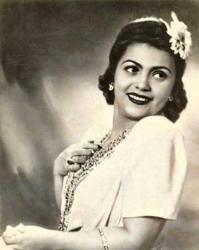
Mafalda Favero
 Italy
Italy- Early Life and Training
- Professional Debut and Career at La Scala
- International Success
- Vocal Versatility and Signature Roles
- Premieres and Collaborations
- Post-War Career and Retirement
- Legacy and Impact
Early Life and Training
Mafalda Favero was born on January 6, 1903, in Portomaggiore, Italy. At the age of 17, she began studying with Alessandro Vezzani at the Conservatory of Bologna. Her talent caught the attention of composer Franco Alfano, who became her mentor.
Professional Debut and Career at La Scala
Favero made her professional debut in Cremona and later moved to Parma. Her official operatic debut took place in 1927 in Parma, singing the role of Liù in Puccini's "Turandot." In 1929, she was invited by renowned conductor Arturo Toscanini to debut at La Scala in Milan as Eva in Wagner's "Die Meistersinger von Nürnberg." She became a celebrated soprano at La Scala, performing regularly until 1950.
International Success
Favero's talent extended beyond Italy. She performed at the Theatre Royal, Covent Garden in London in 1937 and 1939. In 1938, she debuted in the United States at the Metropolitan Opera and San Francisco Opera. Her extensive repertoire included roles in operas by both classical and contemporary composers.
Vocal Versatility and Signature Roles
Favero possessed a versatile voice well-suited for lyrical roles. She was particularly acclaimed for her portrayals of Violetta in "La traviata," Mimì in "La bohème," Liù in "Turandot," Manon in "Manon Lescaut," and both Margheritas in Gounod's "Faust" and Boito's "Mefistofele."
Premieres and Collaborations
Favero was the first singer to perform in the world premieres of Alfano's "L'ultimo Lord" (1930), Mascagni's "Pinotta" (1932), Zandonai's "La farsa amorosa" (1933), Wolf-Ferrari's "Il campiello" (1936), and "La dama boba" (1939).
Post-War Career and Retirement
After World War II, Favero gave a notable performance of Manon Lescaut's third act at the reopening of La Scala under the baton of Toscanini. Despite initially rejecting Desdemona's role, she succumbed to the allure of Madama Butterfly, which she added to her repertoire. However, this decision ultimately led to her early retirement in 1954.
Legacy and Impact
Mafalda Favero's "animalistic sensuality," as described by soprano Giulietta Simionato, allowed her to connect with audiences on a profound level. Despite her relatively modest discography, her captivating performances left an enduring legacy in the world of opera.