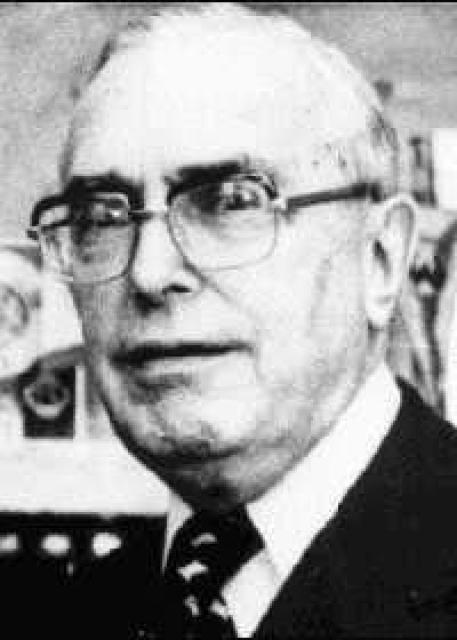
Mahgilis Euwe
 Netherlands
- Max Euwe: The Fifth World Chess Champion
- International Career and World Championship Victory
- Post-War Achievements and Legacy
- Contributions to Chess Development
- Later Years and Immortalization
Max Euwe: The Fifth World Chess Champion
Early Life and Chess BreakthroughsMax Euwe (Euwe) was born on May 20, 1901, in Watergraafsmeer, Netherlands. He became acquainted with chess at the age of four and began competing in tournaments at the age of ten. Euwe's exceptional talent was evident early on, and he claimed the national chess championship of the Netherlands thirteen times between 1921 and 1940.
International Career and World Championship Victory
Euwe achieved remarkable success in international competitions. He won several major tournaments, including the Gothenburg International Tournament in 1920, the Hastings International Chess Tournament in 1923/24 and 1930/31, and the U.S. Open Chess Championship in 1931. In 1935, Euwe made history by winning the World Chess Championship match against Alexander Alekhine. This victory marked a significant shift in the chess world, as Euwe became the first player to dethrone Alekhine after his seven-year reign.
Post-War Achievements and Legacy
After World War II, Euwe continued to compete in tournaments and achieved notable results. He won the Hastings International Chess Tournament in 1945/46 and 1949/50, the London International Chess Tournament in 1946, and the Reykjavik International Chess Tournament in 1948. In 1950, Euwe became an International Grandmaster, and in 1951, he received the title of International Arbiter.
Contributions to Chess Development
Euwe was not only a brilliant chess player but also a great ambassador for the game. As president of the International Chess Federation (FIDE) from 1970 to 1978, he played a pivotal role in promoting chess worldwide and strengthening international sporting connections. Euwe's contributions to chess theory are also significant. Known for his logical and rational approach to the game, he critically examined existing debut theories and explored the transition from the game's opening to the middle game.
Later Years and Immortalization
In his later years, Euwe continued to be an active presence in the chess community. He was a renowned chess writer and served as a professor of mathematics and astronomy at the University of Amsterdam. In 1964, he became the director of the Dutch computer science research center and later taught at the universities of Tilburg and Rotterdam. Euwe passed away in Amsterdam on November 26, 1981. In 1987, the Euwe Memorial tournament was held in Amsterdam to honor his legacy. Euwe remains an icon in the world of chess and is celebrated for his achievements as a world champion, a renowned theorist, and a passionate advocate for the game.


