Mahmyd Hydouberduev
 Tajikistan
- Biography of Mahmud Khudoyberdiev
- Role in the Civil War and Conflict with the Tajik Government
- Conflict with the Tajik Government and Later Activities
- Final Years and Death
Biography of Mahmud Khudoyberdiev
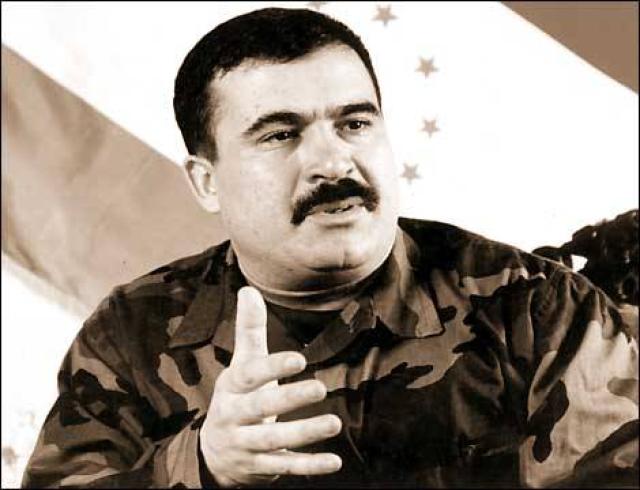
Early Life and Military CareerMahmud Khudoyberdiev was born on October 18, 1964, in Kurgan-Tube, Tajikistan. He came from a working-class family, with his father being Tajik and his mother being Uzbek. In 1982, Khudoyberdiev enrolled in the Alma-Ata Higher Combined Arms Command School named after Marshal Konev and graduated in 1988. During his time in the military, he also fought in Afghanistan as the commander of a reconnaissance unit. His stronghold was the city of Kurgan-Tube, where he served as the military commissar in 1992.
Role in the Civil War and Conflict with the Tajik Government
During the Civil War in Tajikistan, Khudoyberdiev emerged as a field commander and actively participated in various battles. He gained a reputation for his unexpected attacks, successfully blocking and capturing cities such as Dushanbe, Khujand, and Kurgan-Tube. Khudoyberdiev was known for organizing conspiracies and uprisings, although it was difficult to separate truth from legend in the reports about him. He maintained an independent position, refusing to support either the opposition or the National Front.
After the national ceasefire agreement in 1997, Khudoyberdiev rejected the peace agreements with President Rahmonov's government and continued his military actions against the reconciliation government. He relied on Afghan Mujahideen fighters for support.
Conflict with the Tajik Government and Later Activities
Khudoyberdiev clashed with the command of the 11th Brigade of Tajikistan, accusing them of supporting the "mafia" in Kurgan-Tube and the central government. In late 1995 and early 1996, he seized control of Kurgan-Tube and completely controlled the city, leading to the disbandment of the 11th Brigade. In February 1996, Khudoyberdiev's brigade rebelled against President Rahmonov. He led his troops to the presidential palace in Dushanbe, demanding the resignation of the first deputy prime minister of the republic, Ubaydulloev. Although Ubaydulloev initially stepped down, he later returned to the government. Khudoyberdiev eventually complied with negotiations and redirected his brigade to combat Islamist forces in the Vakhsh Valley.
In August 1997, Khudoyberdiev and his special forces brigade staged a mutiny in Kurgan-Tube and surrounded Dushanbe. President Rahmonov managed to calm the situation through a television address and regain control after negotiations. The mutinous special forces were eventually defeated in prolonged battles. Khudoyberdiev formed a new unit based on the remnants of his brigade.
In November 1998, Khudoyberdiev's forces captured the city of Khujand and most of the Leninabad region. Another unit under the command of his deputy, Colonel Sergey Zvorykin, blockaded the Anzob Pass, cutting off communication between northern Tajikistan and Dushanbe. President Rahmonov had to redirect his troops through the territories of Uzbekistan and Kyrgyzstan to bypass the mountains. When Khujand was surrounded, Khudoyberdiev left the city.
Final Years and Death
Until 2001, Khudoyberdiev planned a campaign to capture Dushanbe, seeking support from Afghan Mujahideen fighters. However, in the fall of 2001, he died under conflicting circumstances, and the details surrounding his death remain unclear.