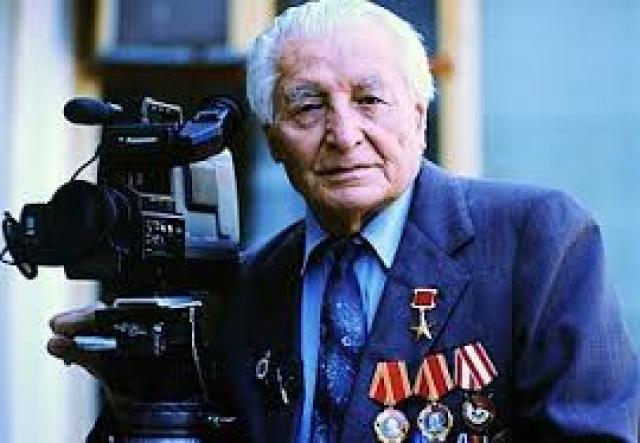
Malik Kayumov
 Uzbekistan
- Malick Kayumov: A Life in Film
- Start of Career and Notable Work
- Expedition to Samarkand
- Wartime Cinematography
- Acclaim and Recognition
- "Lights of Farhad" (1948)
Malick Kayumov: A Life in Film
Early Life and EducationMalick Kayumov was born in Tashkent, Uzbekistan (then the Soviet Union) in 1911. Due to the absence of birth records, the exact date of his birth remains unknown. Kayumov's family was affluent, with his father owning several leather factories and fruit orchards. His mother was well-educated and spoke multiple languages.
Kayumov attended mahallin (local) school and later enrolled at the prestigious Uzbekfilm studio, where he studied cinematography under the renowned director Nikolai Klads. He also received guidance from the German cinematographer Friedrich Werigorodsky.
Start of Career and Notable Work
Kayumov's career in film began in the early 1930s. He made his acting debut in Klads' film "American from Baghdad" and worked as an assistant cameraman on various projects. In 1931, he enrolled in the All-Union State Institute of Cinematography (VGIK) in Moscow but returned to Tashkent without completing his degree.
During the 1930s, Kayumov gained recognition for his work on films such as "Tashkent Textile Plant," which won a gold medal at the New York World's Fair in 1939. He also directed "The Mighty Stream," a film about the construction of the Bolshaya Fergana Canal.
Expedition to Samarkand
In 1941, Kayumov was assigned to an expedition to excavate the tombs of Timur (Tamerlane), his son Shah Rukh, and his grandson Ulugbek in Samarkand. As a skilled cameraman, he documented the process of uncovering the ancient burial sites.
Wartime Cinematography
Frontline Camera OperatorFrom 1941 to 1945, Kayumov served as a frontline camera operator during World War II. He captured battles on the Kalinin Front, near Moscow, and in the liberation of Belarus. Despite being wounded twice, he continued to document the horrors of war.
Acclaim and Recognition
Post-War CareerAfter the war, Kayumov returned to Uzbekistan and resumed his career in filmmaking. He directed and produced over 400 films, including documentaries, feature films, and newsreels. Among his most famous works are:
"Lights of Farhad" (1948)
"Come to Uzbekistan" (1959)"Paranja" (1979)
"Tashkent, Earthquake" (1966)
"Morning in India" (1966)
"Vietnam - My Country" (1973)
"Who Shoots at the Republic" (1984)
Final Years and Legacy
Kayumov continued to be active in filmmaking until his death in 2010. He was a respected figure in the Uzbek film industry and served as a mentor and inspiration to many aspiring filmmakers. His legacy lives on through his countless contributions to documentary and feature filmmaking.


