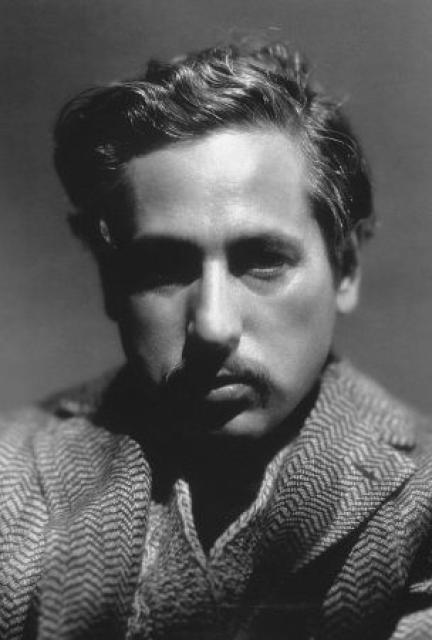
Josef Sternberg
 USA
USABiography of Joseph Sternberg
Joseph Sternberg was an American director, producer, screenwriter, and composer of Austrian descent. He was born Jonas Sternberg in Vienna to Moisey Sternberg, an entrepreneur, and his wife Serafina. In 1901, his father took him and the family to America in hopes of starting a new life. However, after unsuccessful attempts to settle in the US, the Sternberg family returned to Vienna with their five children in 1904.
In 1909, the family once again went to America, and Jonas Sternberg lived on odd jobs. According to his memoirs, the family lived on the verge of the minimum living standard. In 1911, Sternberg began working in a film repair workshop, which later became part of the World Film Corporation (WFC), a film distribution company. In 1914, WFC offered him a permanent contract, and he made a career there, focusing on film editing and creating intertitles for films.
In 1917, with the US entering World War I, Sternberg was drafted into the army for two years and served in Washington. In 1923, he arrived in Hollywood and worked as an assistant director. As producers preferred aristocratic names, he was credited as "Joseph von Sternberg" in the titles. He kept this name throughout his career.
In the summer of 1924, Sternberg directed his first film, "The Salvation Hunters," based on his own screenplay. Charlie Chaplin's United Artists acquired the film for distribution, and it was released in February 1925, receiving tremendous success. Sternberg then signed a contract with Paramount Pictures but left the studio after his second film.
In 1926, he married actress Riza Royce. From 1927 to 1935, Sternberg worked at Paramount Pictures. His 1927 film "Underworld" became a landmark in the development of the gangster film genre. In 1928, he released films such as "The Last Command" and "The Docks of New York." For "The Last Command," he collaborated with German actor Emil Jannings, who won an Academy Award for his role as a Russian general turned Hollywood extra.
In 1929, Sternberg directed his first sound film, "Thunderbolt," and shortly before its premiere, he traveled to Germany. In 1930, upon the initiative of Emil Jannings, he directed "The Blue Angel" based on Heinrich Mann's novel "Professor Unrat." Despite the studio's resistance, he cast little-known Berlin actress Marlene Dietrich in the lead role, which launched her international career. Sternberg divorced Riza Royce due to rumors about his intimate relationship with Dietrich.
From 1931 to 1935, Sternberg directed six films featuring Marlene Dietrich, including "Morocco" (1931), "Blonde Venus" (1932), and "Shanghai Express" (1932). Their successful collaboration complicated his personal life due to rumors about their relationship. Sternberg eventually terminated their working agreement.
In January 1933, shortly before Hitler's rise to power, Sternberg visited Berlin but realized that the political situation would not favor his collaboration with UFA. He returned to Hollywood. In 1935, he moved to Columbia Pictures as Paramount decided in favor of Ernst Lubitsch. However, he terminated his contract with Columbia after his second film.
In 1938, the Austrian government offered him a position as a film commissioner. He hoped to use his position for anti-Nazi propaganda, but due to the annexation of Austria, these plans were not realized. Sternberg experienced a nervous breakdown and creative crisis. In 1939, at the beginning of World War II, he directed "Sergeant Madden" for Metro-Goldwyn-Mayer. In 1941, during the US entry into the war, he directed "Shanghai Gesture" for United Artists, despite his deteriorating physical condition. In 1943, he made the documentary film "The Town" about Madison, Indiana, commissioned by the Department of War Information.
Sternberg married Jeanette McBride in 1945 but divorced her two years later. In 1947, he began teaching at the Cinema Department of the University of California. In 1948, he moved from Hollywood to New York, distancing himself from his films and considering them immature. He married Mary Otis Wilner in October, and they had a son. On November 22, 1949, Sternberg sold his extensive art collection at an auction to finance a new film.
In 1952, he directed his final film, "The Saga of Anatahan," in Japan. The black-and-white poetic film did not achieve commercial success. In 1960, Sternberg accompanied Marlene Dietrich on her tour in West Germany and became a member of the Academy of Arts in West Berlin. On December 22, 1969, Sternberg passed away in Hollywood.


