Manikandan
 India
India- Early Life and Diagnosis
- Struggles and Poverty
- Hope and Surgery
- Surgical Details
- Recovery and Transformation
- Encephalocele: A Rare Neurological Disorder
- Epidemiology and Risk Factors
- Prevention and Treatment
Early Life and Diagnosis
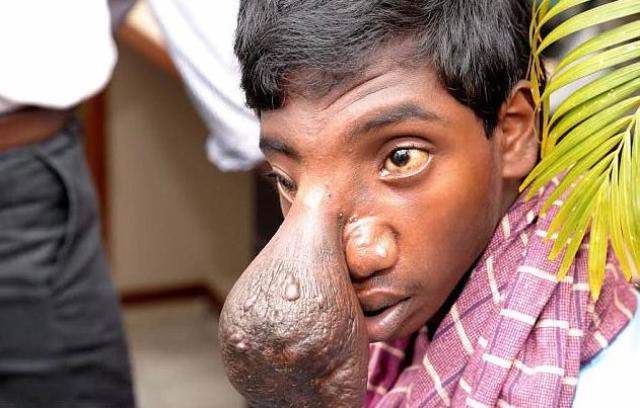
Manikandan, a 13-year-old boy from the southern Indian state of Kerala, suffered from a rare condition called encephalocele. The disorder caused a portion of his brain to protrude from his skull, resembling a tennis ball-sized mass that swung precariously over his nose. This unusual appearance made Manikandan an outcast in his community, leading to isolation and depression.

Struggles and Poverty
Manikandan's parents, who worked as daily wage laborers on plantations, lived in poverty and struggled to meet their son's medical needs. They desperately appealed to the government for assistance in treating their son's disfiguring brain hernia.
Hope and Surgery
Manikandan's pleas were answered when he was accepted for surgery at the Amrita Institute of Medical Sciences. A team of ten surgeons led by Dr. Subramania Iyer performed a complex operation to remove the "brain sac" and restore hope to Manikandan's life.
Surgical Details
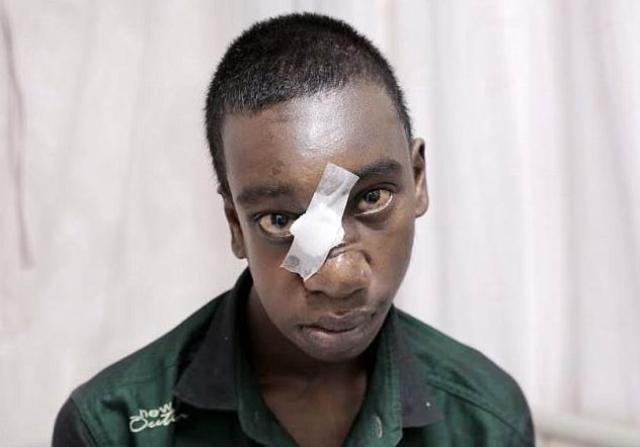
The surgery involved opening Manikandan's skull and carefully separating the healthy brain tissue from the non-functional portion that was protruding from his face. The defect in his skull left by the encephalocele required extensive reconstruction. Additionally, the surgeons repositioned his eye sockets and reconstructed his nose.
Recovery and Transformation
Manikandan made a remarkable recovery after the surgery and was preparing for discharge. He now had the prospect of attending school and participating in social activities like any other child his age.
Encephalocele: A Rare Neurological Disorder
Encephalocele is a rare birth defect involving the brain and skull. It occurs when the fetal neural tube fails to close properly during pregnancy, creating an opening through which the brain membranes and sometimes brain tissue can protrude. The condition is typically diagnosed at birth but can sometimes go unnoticed in cases where the protrusion is small.
Epidemiology and Risk Factors
Encephalocele affects approximately 375 babies in the United States each year, making it a relatively rare condition. There is a genetic predisposition to the disorder, and it is more common in families with a history of spina bifida and anencephaly. Certain environmental exposures before and during pregnancy may also increase the risk of encephalocele.
Prevention and Treatment
While there is currently no way to prevent encephalocele, measures can be taken to reduce the risk of the condition. These include maintaining a healthy lifestyle during pregnancy and taking folic acid supplements. Treatment for encephalocele primarily involves surgery to remove the brain protrusion and repair the skull defect.