Mao Czedun
 China
China- Early Life and Revolutionary Beginnings
- The Autumn Harvest Uprising and the Long March
- Military Theory and the Sino-Japanese War
- Victory in the Civil War and the Founding of the PRC
- The Early Years of the PRC and the Korean War
- The Great Leap Forward and the Cultural Revolution
- Legacy and Later Years
Early Life and Revolutionary Beginnings
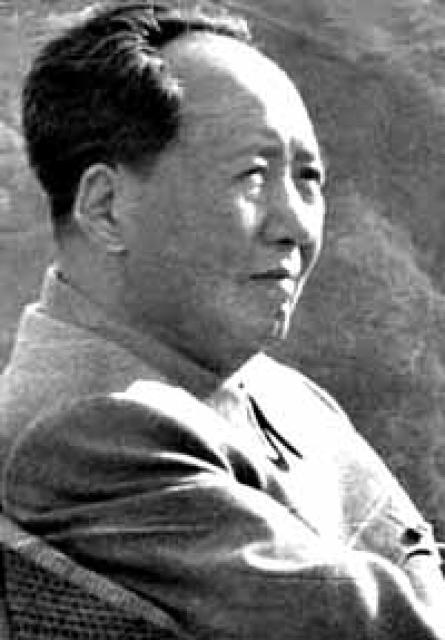
Mao Zedong was born on December 26, 1893, into a peasant family in Shaoshan Village, Hunan Province. He joined the revolutionary movement after attending school in Changsha and becoming involved in radical politics.
The Autumn Harvest Uprising and the Long March
In 1927, Mao led the "Autumn Harvest Uprising" in Hunan and Jiangxi. Afterwards, he established the first revolutionary base in China at Jinggangshan Mountain. In 1934, the Chinese Red Army embarked on the Long March, a strategic retreat to evade the Nationalist forces.
Military Theory and the Sino-Japanese War
In the 1930s, Mao developed his theories on guerrilla warfare and revolutionary strategy. He wrote influential works such as "Problems of Strategy in China's Revolutionary War" and "On Protracted War." During the Sino-Japanese War (1937-1945), Mao led the Communist Party's resistance against the Japanese invasion.
Victory in the Civil War and the Founding of the PRC
In the late 1940s, the People's Liberation Army (PLA) under Mao's command launched a series of decisive battles against the Nationalist forces. In 1949, the Nationalist government was overthrown, and on October 1, 1949, Mao proclaimed the founding of the People's Republic of China.
The Early Years of the PRC and the Korean War
After the establishment of the PRC, Mao continued to lead the country through socialist transformation and the Korean War (1950-1953). He implemented land reform, industrialization, and collectivization policies.
The Great Leap Forward and the Cultural Revolution
In the late 1950s, Mao launched the "Great Leap Forward," a campaign for rapid economic development that ultimately led to widespread famine. In 1966, he initiated the "Cultural Revolution," a political and social upheaval that lasted for a decade.
Legacy and Later Years
The Cultural Revolution had significant negative consequences for China. Mao died in 1976, and his legacy remains a subject of debate. He is credited with leading the Chinese Revolution to victory and founding the PRC. However, his later policies, including the Great Leap Forward and the Cultural Revolution, caused immense suffering and economic disruption.