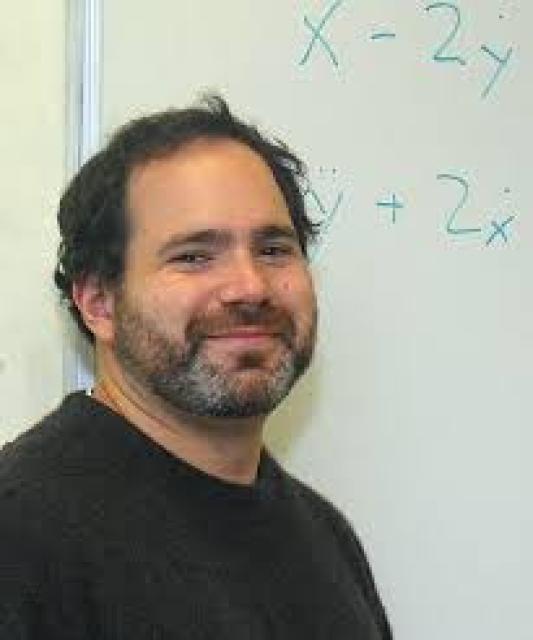
Marc Kuchner
 USA
USA- Dr. Karl Glazebrook: A Visionary Astrophysicist
- Early Life and Education
- Groundbreaking Research
- Innovations in Coronagraphy
- Advocacy for Exoplanet Exploration
- Accolades and Recognition
Dr. Karl Glazebrook: A Visionary Astrophysicist
Dr. Karl Glazebrook is a renowned American astrophysicist who has made significant contributions to the field of astronomy. Currently affiliated with the Goddard Space Flight Center, he is a pioneer in the development of coronagraphs, instruments designed to detect Earth-like planets.
Early Life and Education
Dr. Glazebrook's passion for astronomy ignited during his undergraduate studies at Harvard University, where he earned his Bachelor's degree in 1994. His exceptional academic achievements laid the foundation for his impressive career in astrophysics.
Groundbreaking Research
Dr. Glazebrook has played a pivotal role in the advancement of astronomy. He is widely recognized for his contributions to the development of the Terrestrial Planet Finder (TPF) and the James Webb Space Telescope (JWST), which is expected to succeed the iconic Hubble Space Telescope.
Innovations in Coronagraphy
Dr. Glazebrook's expertise in coronagraphs has earned him international acclaim. These instruments play a crucial role in suppressing starlight, enabling astronomers to observe faint objects, such as exoplanets, in close proximity to bright stars.
Advocacy for Exoplanet Exploration
Beyond his research, Dr. Glazebrook is also an active advocate for exoplanet exploration. He has proposed the concept of "ocean planets" and "carbon planets" and conducted seminal observations of the debris disk surrounding the white dwarf G29-38.
Accolades and Recognition
Dr. Glazebrook's contributions to astronomy have been widely recognized. In 2009, he received the prestigious Award from the Optical Society of America for his groundbreaking work on coronagraphs. His vision and dedication continue to inspire the next generation of astronomers.