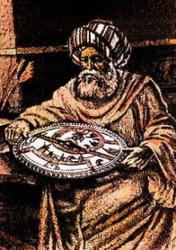
Guillermo Haro
 Mexico
- Guillermo Haro: Mexican Astronomer
- Director of Tonantzintla Astrophysical Observatory
- Work at National Astronomical Observatory
- Discoveries and Contributions
- Accomplishments and Recognition
Guillermo Haro: Mexican Astronomer
Guillermo Haro was a renowned Mexican astronomer who made significant contributions to the field of astrophysics. Born in Mexico City, he attended the National Autonomous University of Mexico, where he completed his education.
Director of Tonantzintla Astrophysical Observatory
In 1950, Haro became the director of the Tonantzintla Astrophysical Observatory. During his tenure, he founded the National Institute of Astrophysics, Optics, and Electronics in Tonantzintla and served as its first director from 1972 to 1983.
Work at National Astronomical Observatory
From 1947 to 1972, Haro worked at the National Astronomical Observatory of the National Autonomous University of Mexico, where he also served as the director from 1948 to 1958. He played a crucial role in establishing another observatory in the San Pedro Martir mountains.
Discoveries and Contributions
Haro is best known for his discoveries and research on various types of peculiar objects within our galaxy. He independently discovered star-like objects with strong emission lines in their spectra, known as Herbig-Haro objects. These objects, now named after Haro and American astronomer George Herbig, are small gas clouds moving through interstellar medium at supersonic speeds and often result from explosive events near T Tauri-type stars.
Haro also observed and studied the flickering activity of stars in the Orion Nebula and other stellar associations of different ages. His findings led to the widespread study of eruptive variables in star clusters and associations.
Furthermore, Haro discovered 67 new planetary nebulae, expanding the known catalogue from 342 to 409. He developed a photographic method to study T Tauri stars with strong ultraviolet emission and, in collaboration with V. Leiden, conducted extensive research on blue star-like objects near the southern galactic pole, discovering 8,746 of them.
Additionally, Haro investigated galaxies with strong ultraviolet emission, studying regions of ionized hydrogen in galaxies such as M31, M33, M82, and M83. He also made several astronomical discoveries, including 11 new objects within our galaxy, one extragalactic nova, and one comet (Haro-Chavira 1954 k).
Accomplishments and Recognition
Haro's work significantly influenced the direction of astronomical research in Mexico. He served as the editor of the "Bulletin of the Tonantzintla and Tacubaya Observatories" from 1951 to 1974 and the "Bulletin of the Tonantzintla Observatory" from 1974 onwards.
He was a member of the Mexican Academy of Sciences since its establishment in 1959, serving as its president from 1960 to 1962. Haro was also a member of the National College, the Colombian Academy of Exact, Physical, and Natural Sciences, and the International Astronomical Union, where he held the position of vice-president from 1961 to 1967.
For his outstanding contributions to astronomy, Haro received numerous awards and honors. He was awarded the Luis G. Leon Gold Medal by the Mexican Astronomical Society in 1953, the National Science Award in 1963, and the M.V. Lomonosov Gold Medal by the USSR Academy of Sciences in 1985.