
Marco Vratogna
 Italy
ItalyBiography of Marco Vratonja
Marco Vratonja, the renowned Italian opera singer (baritone), is known worldwide for his distinctive voice with a stunning range, timbre, and power. He was born in La Spezia, Liguria, Italy, and received his musical education at the Puccini Conservatory.

Debut and Early Success
Vratonja made his opera debut in December 2000, portraying Count Stankar in Giuseppe Verdi's opera "Stiffelio" at the Teatro Verdi in Trieste. Since then, he has been successful and received invitations to perform in the most prestigious opera productions.
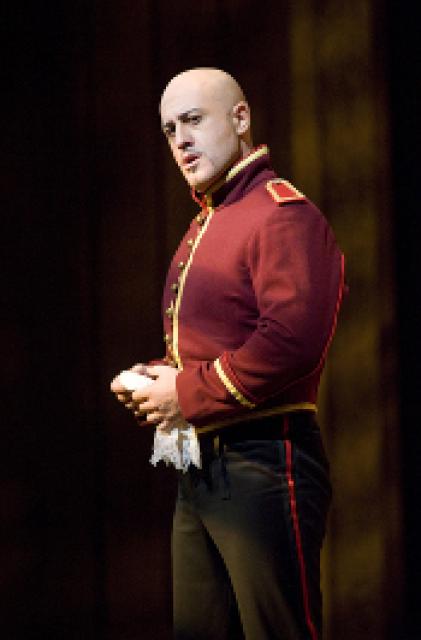
He played the role of jeweler Paolo Albiani in the opera "Simon Boccanegra" at the Teatro La Fenice in Venice and portrayed Count di Luna in "La Traviata" at the Teatro de la Maestranza in Sevilla. His prestige significantly increased after receiving the leading role in "Macbeth" under the direction of Massimo de Bernart at the Teatro Comunale in Modena. He later returned to this theater to participate in a concert celebrating Luciano Pavarotti's 40-year career.

International Performances
In the later stages of his career, Vratonja performed with the Opera Company of Philadelphia in "Carmen" at the Teatro Alighieri in Ravenna and collaborated with Oper Frankfurt in "Nabucco" at the Teatro Comunale. He also performed in many European theaters, including Stuttgart, Brussels, and Genoa.
Vratonja participated in "Madama Butterfly" and a new production of "Simon Boccanegra" in Amsterdam. He achieved great success with roles in "Luisa Miller" in Leipzig, "Andrea Chenier" in Berlin, and "Otello" in Parma. He debuted at Covent Garden in "Un ballo in maschera" and made his first appearance at the Liceu in Barcelona in "Simon Boccanegra."
Future Plans
In Vratonja's upcoming plans, he will perform at the Wiener Staatsoper in "Andrea Chenier," in Tokyo and Seattle in "Rigoletto," and in Frankfurt in "La Fanciulla del West." He also plans to appear in New York with "Otello" and in Tel Aviv with "Aida" and "Nabucco."
To maintain his form, the Italian baritone engages in running and breathing exercises that he has developed over the years. He records his performances to capture his emotions and works on his breathing and voice based on the sensual experience. Vratonja strives to discover and eliminate any deep-rooted harmful habits and faults.
When asked what advice he would give to a young baritone if they had the chance to meet him personally, Vratonja replied, "It's hard to say. In my opinion, starting out is not easy nowadays. But if someone has talent and aspirations, they must work hard and do it like I do!"


