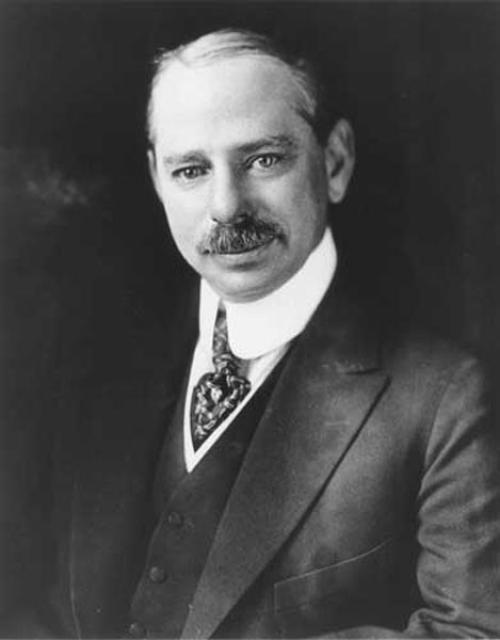
Marcus Loew
 USA
USA- Marcus Loew: A Businessman with Vision
- Early Business Success
- The Birth of MGM
- Joining Forces with Mayer and Thalberg
- A Legacy in Entertainment
Marcus Loew: A Businessman with Vision
Born to a humble family in New York City, Marcus Loew (1870-1927) was forced to work at a young age, leaving him without a formal education. Despite these challenges, he possessed an entrepreneurial spirit that would lead him to establish one of the most iconic entertainment companies in history.
Early Business Success
Loew's initial investment was in a modest nickelodeon, a precursor to the cinema. Teaming up with Adolf Zukor, Joseph Schenck, and Nicholas Schenck, he expanded his venture into a successful chain of theaters, becoming one of the most prominent cinema operators in the United States.
The Birth of MGM
In 1913, Loew owned and managed theaters in major cities across the country. His true impact on the industry, however, began in the early 1920s when he acquired Metro Pictures Corporation and later the financially troubled Goldwyn Picture Corporation, which held the rights to the "MGM" brand.
Recognizing the need for strong management, Loew took over Goldwyn's operations in Los Angeles while leaving his partners to manage the East Coast theaters. This move signaled the formation of MGM, a conglomerate that would revolutionize the industry.
Joining Forces with Mayer and Thalberg
To stabilize MGM's finances, Loew sought the assistance of Louis B. Mayer, who brought his expertise in producing low-budget films under the guidance of master producer Irving Thalberg. The partnership between Loew, Mayer, and Thalberg became the driving force behind the success of MGM, which released its first film under the new brand in 1924.
A Legacy in Entertainment
Loew's company, Loew Inc., served as the financial backer for MGM and retained controlling interest for decades. Tragically, Loew himself did not live to see the full impact of his creation. He passed away in 1927 at the age of 57, leaving behind a legacy as a pioneer in the entertainment industry. He was posthumously honored with a star on the Hollywood Walk of Fame at 1617 Vine Street.